


Having spent time in such serene surroundings like this:
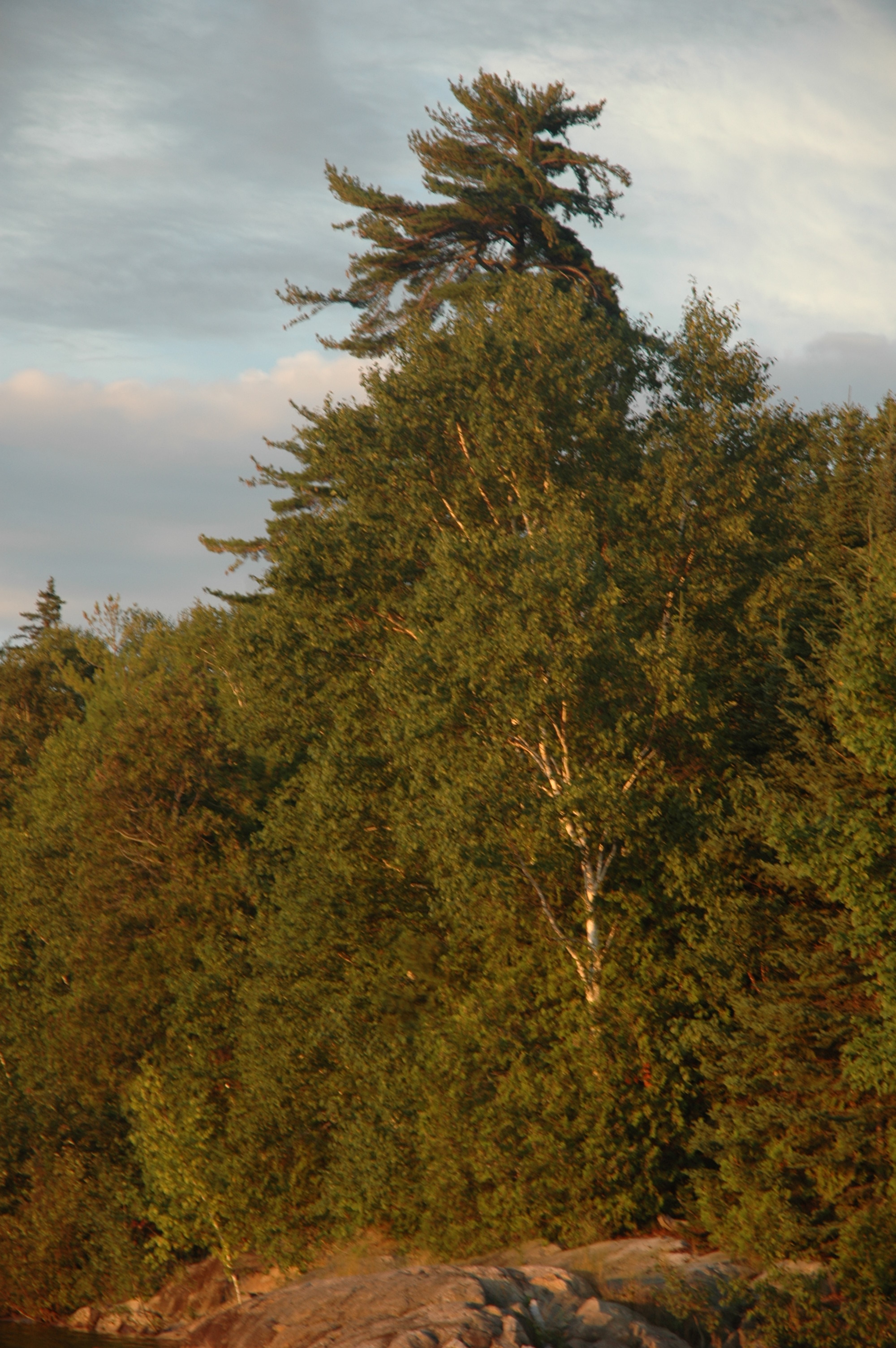
Canada has magnificent trees.
…is it not surprising that my mind had taken a break from the ‘everyday’ and slipped into a bit of philosophising?
If a tree falls in the forest, and no-one is there to hear it, would it make a sound?
In the past, when discussing this with my kids and husband, we have invariably fallen into the pitfalls like, for example, trying to define what does ‘sound’ mean: is it simply the movement of air molecules in a particular way, or does it have to be ‘perceived’ by human ears? (If it is recorded, then the sound we hear is made by the recorder, not the tree…and endless possibilities along these chains of thoughts.)
This year, I began so see it from a different perspective…
Richard Feynman is perhaps my favourite genius of the 20th century – and I am convinced he is an ‘Aspie’ to boot! ( Just reading his most awesome book, ‘Surely You’re Joking, Mr. Feynman!’, is an excellent lesson in how an ‘Aspie’ mind organizes thoughts and commits them onto paper – plus it is fun and curiously comforting to read). In his Lectures (available as podcasts, and ideal for relaxing with while ‘away from it all’), specifically, in the ‘Quantum Mechanics’ lecture, he also visits this question about the proverbial tree falling in the forest…
Dr. Feynman gives some very specific qualifications regarding this issue: he would not be a physicist had he not done that. He states that in the real world, even if there is no observer when the tree falls, there are still unmistakable physical signgs that it had, indeed, made a sound. These signs, perhaps as minute as little scratches from vibrating leaves/needles as the sound energy is transferred to them, could then be observed after the event itself and the presence of such sound would be conclusively demonstrated. Thus, he concludes that ‘in a real world, of course, a tree falling in a forest makes a sound‘.
He is, of course, absolutely correct – given the qualifications he does.
Yet, listening to him made me think that perhaps his ‘after the fact observer’ – as our familial discussions from the past – were really missing the whole point of the question!
Whether during the act of the tree falling, or afterwards; directly or through recording devices of some sort (even leaves and needles) – this introduces an observer. And the fact remains that if an observer is present, and the original condition (or, rather, its intent) is breeched.
Yes, I’ll gladly concede that in the real world, it might be impossible to have a ‘no observer’ scenario – but that is not the point. The question asks us about a hypothetical situation, where no observation (during or after the event) occurred (even had it been possible).
Let us imagine an observer who makes a direct observation that 999 trees, as they fell, indeed did make a sound. Then the observer leaves, and our proverbial tree falls. No observation as to the sound of any kind had been made during the event. The scene has since been altered so much that no additional evidence can be gathered. How can we answer the question now? Did our proverbial tree make a sound, or not?
And this, in my never-humble-opinion, is the crux, the core, of this principle: one can only say that one does not know.
It would be reasonable to predict that it is highly likely that the tree had made a sound, based on previous observations. But one would not know !
This is the difference between direct observation and a guess. Perhaps it might be an ‘educated guess’ (based on the previous 999 observations) , but it is still only a guess. And that is the whole point: to get us to stop and think, to learn to recognize that difference between what we know and what we are making educated guesses about (or a semi-educated guess about).
One of my sons thought this simply reduced the question to the ‘Schrodinger’s Cat’ scenario, but I think there is a difference. This is not about probability curves and their collapses, this is about learning to recognize the blinders we all wear which let us treat guesses (whether ors or those of others) as equally valid to observed facts.
And it is about time that some of these blinders statred coming off!
After all, guesses, even educated ones, are not facts – and we must not fall into the easy trap of treating them as such. Especially in cases where the guess is not based on 999 direct observations of this very event…or not on even one such event having ever happened!
Which leads me to the next question: If the global temperatures change by 0.6 of a degree, and no well-financed lobby group is there to use it as a pretext to organize a scare-mongering, funds-transfering campaign, would anyone notice?
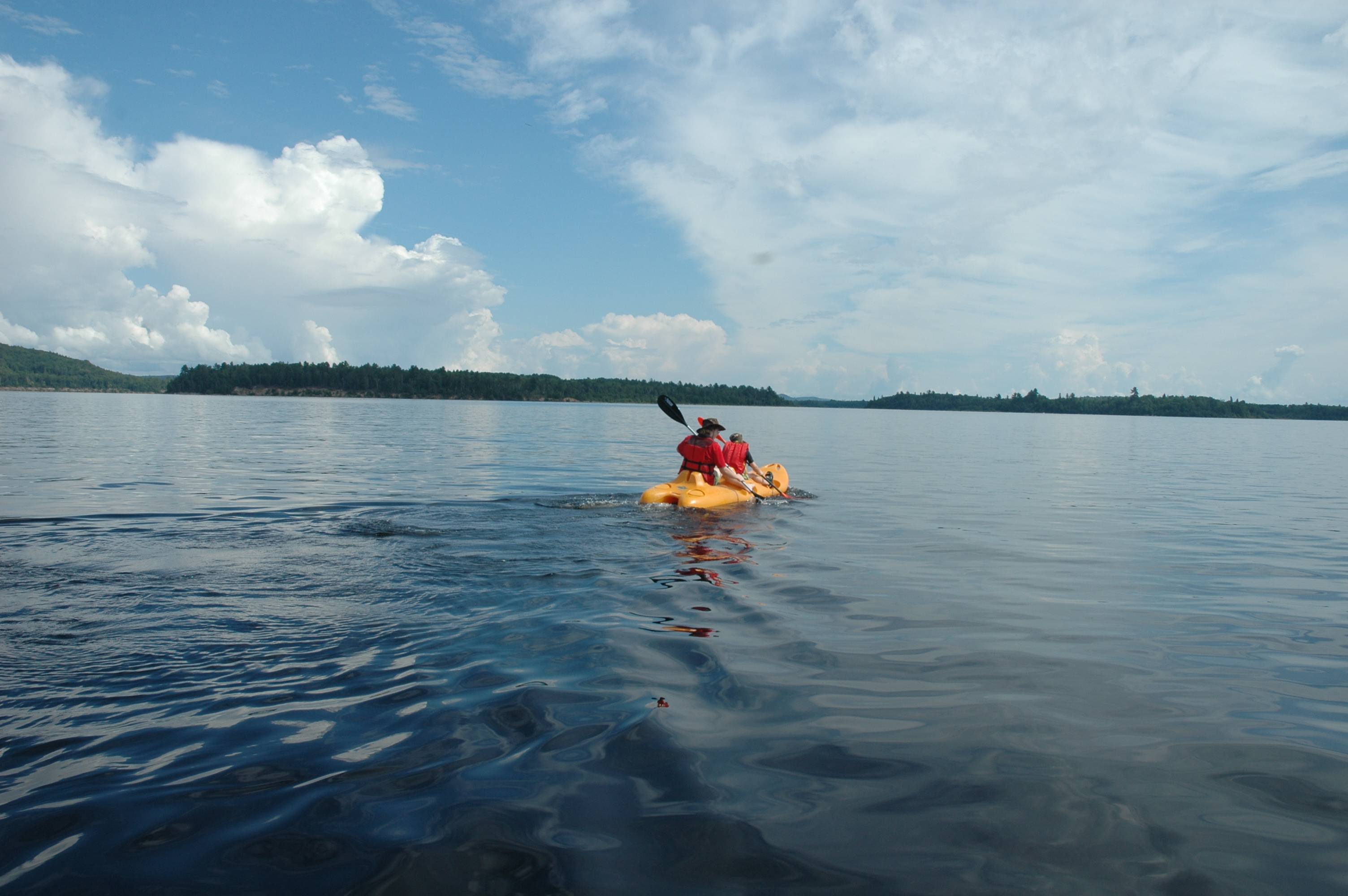
Perspective - we all need it!
 Xanthippa's Chamberpot