Aspergers and writing – sentences

Writing a sentence seems like a simple thing – just figure out who is doing what, and write it!  Right.  Except it is not that simple for an Aspie

This seems incomprehensible to many teachers, parents, and any ‘outside observers’.  How come an Aspie is fully capable of presenting a coherent, detailed explanation of something without any preparation, but when asked to write a sentence or two on that same topic, they are unable to produce one?  How come that when asked a question, an Aspie student can speak for 15 minutes, giving exhaustive, accurate answer, but will only put down a single word as a response to the same question on a written test?

It does not seem credible – to the teachers or parents – that this could be possible.  ‘Just write down what you said!’ tends to be the response/command/advice, but it just does not work like that.  I do not know how or why, but I have seen it and experienced it.  Needless to say, this only leads to very high levels of frustration among both sides…

Many professionals in this field are studying this, and doubtlessly, there are many excellent theories about why or how this occurs.  I do not attempt to address that here – I just hope to look at the mechanics of how this can be overcome… at least, a tiny little bit!

First, the way language is taught is terribly important.  It can mean the difference between practical illiteracy (at least, in the ‘output’ phase) on the one hand, and ‘functionality’ on the other.  How can this be so?

Aspies tend to like to follow rules.  Perhaps not everyone’s rules, perhaps they have a lot of difficulty decoding social rules, but – once a rule is understood and accepted, Aspies tend to derive comfort from adhering to them.  This is true for language.

It is unfortunate that the current ‘model’ for teaching English (as a first language) in much of North America is the ‘whole language’ approach:  this is the hairebrained idea that children will simply ‘absorb’ the rules of English when they are ‘exposed’ to them.  Perhaps this may work for a small minority of kids.  It certainly makes the teaching less laborious, because the teacher does not have to actually teach grammar, correct grammatical errors in written work (we are looking for substance, not grammar…).  And, much more often than I would have liked, I have come across teachers who are not even able to follow simple rules of grammar themselves!

This is a major problem for Aspies:  the rules are difficult to ‘absorb’ – especially when the teacher does not use proper grammar….  Constructing a proper sentence then becomes quite bewildering.  Yet, many Aspies can master written language quite well, so there must be something else going on here.

Perhaps there is a different part of the brain that controls verbal and written expression.  Or, perhaps many Aspies consider things that are ‘written’ to be ‘permanent’ – and therefore there is a much higher level of perfection that is required.  I have asked many adult Aspies who have tremendous difficulties writing things, and there seem to be striking similarities among most of them.

First, the idea.  That is the easy part.  In other words, the Aspie knows what he (the friends I questioned were all men) wants to write.  The problem comes in the how to write it:  they will put a word down, wonder if it is the most accurate one – and start ‘googling’ it. Wikipedia probably has some pretty good definitons of this – you should check it…. 
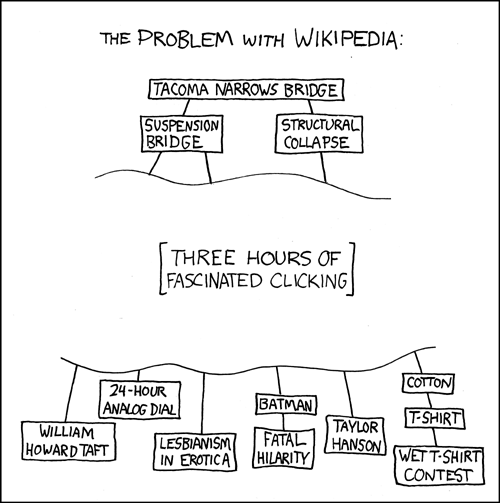
The problem with Wikipedia

OK, refocus.  Now you have the correct word.  So, how do you fit it into the sentence correctly?  Is that the right grammar?  Perhaps you should ‘google’ that….


OK, refocus.  You now have a noun and a verb, most likely in the proper grammatical structure.  But it is nowhere near sufficient to capture the meaning…  Perhaps it is time for lunch.

And so it goes.  Not very productive, but, eventually, some semblance of a sentence will be produced.

So, how can one help a child learn to overcome this?

My personal exerience gave me some insight.  I was lucky enough to be able to reproduce patterns – sound patterns and picture patterns.  This helped me get selected for a language school when I was 8 years old… and while I was struggling to write basic sentences in my native tonngue, miraculously, I did not experience the same problem in the new languages.

Perhaps advice from a teacher helped: 

‘Do not write what you want to say, write what you are able to say!’

With a limited vocabulary of less than 50 words, and only a rudimentary rules of how to construct a sentence according to the new language’s rules, the prospect of ‘writing a sentence’ became more managable!  With only a limited number of permutations possible, selecting the best possible combination of them which most effectively gets the point across became easy!

When my older son got to a point in his schooling where he was expected to construct more than just simple sentences, he started having a problem.  Trying to help him, I realized that he only had a very basic (and somewhat flawed) idea of how English grammar works….

Solution?

Basic textbook of Latin!

The reasons for selecting Latin were many:  from loan words down.  But the most important reason was that the Latin grammar was very explicitly spelled out – and that the endings of the words would change, depending on what role in the sentence that word played.  This is very key – it reinforces the rules of grammar, and helps figure out how to use them to construct a sentence.

My goal was not to teach my son Latin.  As a matter of fact, we spent no effort on memorizing vocabulary – we only focused on learning the rules for ‘flexing’ the words:  what does a particular ending mean – and what it tells us about the role this word plays in the sentence.  This skill was then easy to transpose into English sentence composition.

Yes – sentence composition.  Because that is how it has to be approached – this word is the subject.  This word describes the subject.  This word is the verb.  This word describes the verb….  and so on.

For younger kids, it might help to use tools:  on small, rectangular pieces of card paper, print a limited number of words related to the topic the child needs to write a sentence about.  Depending on the kid, start with 20-30.  Separate them according to their role in the sentence – it migh be very helpful to colour code them.  Nouns in one colour, verbs on another, pronouns, adverbs…so on.  Or, just separate them into piles. 

Then, when the child needs to write a sentence, let her/him pick out the right words and ‘build’ the sentence out of the ‘card words’.  Since only a very limited number of words are available, the child must be told the task is not to ‘answer the question’ – because that might seem impossible!  Explain to the child that the goal is to ‘build the best possible answer out of these words.  It will not be perfect – and it is not expected to be! Make it a game to try to create the best ‘best fit’ that could be done from this set of ‘card words’.

Once the sentence is created, the child can copy it – and use it as the answer. 

The word-pool can be altered, based on the topic. It can be increased or decreased, based on the child’s needs:  the more difficulties, the fewer words to pick from.  It is a tedious process, but it does work – or, at least, it worked in several instances when I have used it (not just with my own kids). 

My personal opinion is that it teaches several things: 

  • By limiting the pool of words, it makes ‘finding the right word’ easier – by making it OK to settle for the ‘best available word’.
  • By forcing the use of ‘different types’ (as signified by colours/piles of words, based on role played in the sentence) of words, the Aspie reinforces the proper use of grammar
  • This exercise builds one’s confidence in their ability to form sentences – which is much more important than most educators acknowledge.
  • Perhaps most importantly, it creates the habit to ‘write what you can, not what you want to’

It is not perfect, but this might help overcome the obsessive need to only write an ‘impossibly perfect’ sentence…

Learning to write is not easy for people with Asperger syndrome.  There are many obstacles in  their way:  from mechanical difficulties, to ‘holding onto their thought long enough to write it down’.  Add the desire for perfectioninsm in written expression…. 

Following the suggestions of professionals who know the child is the best way to help him or her learn to overcome the difficulties which are part and parcel of Aspergers.  Yet, if nothing seems to work, frustration levels are building, the child is unhappy… I know there were times when I would have tried just about anything!  And letting the child help sort the words just might take an edge off the frustration.

Aspergers, drawing and art

Many kids with Aspergers do not enjoy drawing and colouring.  This could be due to the fact that many have less ‘handedness differentiation’ – neither hand has better developed control, so drawing (and eventually writing) is more difficult.  But there could be more to it than that.

Just as there seems to be a difficulty in translating thoughts into a written form, some Aspies experience a similar difficulty in translating visual images into a drawing.

This is strictly my own observation, and I am not aware of a connection between these two aspects in any professional literature, but I cannot but wonder if this is a different expression of one underlying problem.  Let me describe it a little bit.

My dad has never been diagnosed with Aspergers – nor has he ever sought an opinion on the topic.  However, I do see some similarities between the way he, my sons and I processes information – at least, in some instances.  When we were trying to figure out this whole ‘Aspergers’ thing, he shared with me something that happened to him, when he was about 10 years old.

Standards and teaching methods in school were a little differen in his days, and teachers were more authoritarian.  During an art class, a substitute teacher said they were to draw a picture of a pig and hand it in at the end of the class.   A simple assignment – right?  Except that nobody had ever taught him how to go about drawing a picture of a pig… and my dad simply could not figure out how to even start.

He sat there, for the whole period, without making a single mark on his sheet of paper.  The teacher was not pleased.  As a matter of fact, he got very angry.  My dad was smart and had high marks, but he was not the most compliant of students.  The teacher would not believe him when my dad said he did not know how to do draw a pig, and concluded this was simply defiance…  and to report to him after school for detention.

The detention?  My dad was to sit at his desk until he drew the picture of a pig, then he was to bring it to the teacher’s office.  Once that was done, he could go home.  But try as he might, he simply could not resolve the image of a pig into its componenet parts, which he could then draw.  So, he sat at his desk, for several hours.  Finally, the janitor took pity on him. 

He, too, found it hard to believe a kid could not figure out how to draw a pig, but when he saw my dad just sitting there, for hours, he took a plain piece of paper and a pencil, drew a rectangle for a body, a triangle with a dot for the head and an eye, four sticks coming out of the bottom of the rectangle for legs and a curly spring on the back for tail.  “Here” he said.  “A pig!”

This was a revelation to my dad!  He easily reproduced the simplified ‘pig’ onto his sheet of paper, brought it to the teacher, and was allowed to go home.  

I have since met several people who do not naturally have an ability to break down a visual image into subsets, individual lines, which could then be put onto paper.  However, they can be shown how to go about it, and learn the process – just that to be effective, this process of learning needs to take place when they are older than when most kids learn to draw. 

Similarly, many Aspies do not have a natural ability to break a thought into constituent parts that can be written down – we start looking up words, checking spelling and grammar, wonder about better ways of saying it…. and end up producing very few actual words…  Yet, like with drawing, this process can also be learned – and it, too, will only be effectively learned at a later age than that of non-Aspie peers.

Could it be the same ‘prioritization’ or ‘orderig’ of ‘stuff’ that is causing both effects?

Another connection between them:  once Aspies ‘learn’ this process, they do not simply ‘learn’ it, they often ‘master’ it, and become better at it than most other people.  And yes, some do become successful writers or artists… Eccentric, yes, but successful.

Is this simply ‘overcompensation’?  Or is there something else at play here?

Aspergers and writing – holding on to that thought!

Different people are affected by Asperger Syndrome differently, and to varying degrees – it is more of a ‘continuum’ than an ‘on/off switch’.  I am by no means an expert – but I have some experience in living with it, and raising kids who are also Aspies.  The following will not work for everybody, but it did work for one of my kids.  Perhaps it may help another family, too – if not to improve skills, then at least to build an understanding.

Many Aspies are quite capable of speaking their mind, but have difficulty writing.  Previously, I have noted several factors that could be at play.  Here, I would like to look at only one of these:  how to hold on to that thought long enough to write it down.

Whether it is some problem with short-term memory, a non-differentiation in the prioritization of our 7-or-so ‘attention slots’, or if it is due to different causality, the practical result is that many Aspie kids say: ‘there are so many ideas swirling in my head, I cannot hold on to one thought long enough to write it down’. 

This problem could be related to ADD – a condition which often occurs along with Aspergers.  And it is something that can be incredibly frustrating.  The child knows the answer, but there is some kind of a breakdown in the communication between the brain and the hand…  To an outside observer, it looks like nothing less than obstinance!

The earlier it is discovered that a child has this aspect of Aspergers, the easier it is to correct.  As is so often the case, the smarter the child is, the longer they can ‘mask’ the problem by ‘leveraging their core competencies’.  (Ooooh, I do love it when I talk bureaucreteese – while I don’t have to!  I amuse easily.)  This can be a good thing:  if the problem is mild, this can be a way the child ‘owns’ the problem and develops perfectly tailored coping mechanisms.

My son’s problem, however, was not mild.  Even though he did well, hiding his problem for quite a long time, half way through grade 2 he simply ‘got stuck’.  And even when we discovered it, it was completely new to us.  Nobody seemed to understand why he would sit at a desk for an hour and manage to write less than 3 words.

In grade 1, he tackled his inabiltiy to learn to read – and leapfrogged his peers, reading ‘The Lord Of The Rings’ on his own during the summer.  He had mastered the mechanics of forming letters – this also had been a struggle in grade 1.  (He had gone to a Montessori pre-school, where he learned to iron washcloths instead.)  So, we had been optimistic that we were ready for grade 2!

And now, this – to us – unprecedented and inexplicable inability to write even the siplest sentences.  The teacher was great, and even took a seminar to see if she could learn about this – but by this point, we had never even heard the word ‘Aspergers’, or what it means.  It took us a long time, but we finally worked out a way to get written work done.

  1. My son and I would sit at the table, he would read the question, and say the answer out loud.   
  2. I would write the answer in large, clear letters on a notepad. 
  3. I would place the notepad on the table, and he’d get ready to write his answer.
  4. Now I asked:  “What is the question?”  – He’d read it out loud again.
  5. “What is the answer?”  –  He’d say the whole answer again.
  6. “What is the first word?”  –  He’d repeat it.
  7. “What is the first letter?”  –  He’d repeat it and write it.
  8. “What is the second letter?”  –  He’d repeat it and write it.
  9. “What is the third letter?”  –  He’d repeat it….

And so on.

Except that, at the beginnig, by the second letter, he would forget what it was.  And what the word was.  And what the question was.  So, we’d go back to reading the question, answering it, reading what he had written, and forcing him to realize what the next letter was.  

It was hard, and it took a long time.  Especially in the beginning – it could easily take us an hour to write 4 sentences.  But, he was doing it!  And over time – long time – he built up the capacity to hold on to more and more information, before needing to go back and re-checking it.

At first, on the advice of the teacher, we had instituted a ‘reward system’.  She was one of those teachers who really care – and I don’t know if I could have done it without her.  And, because I did not give my kids too many sweets – she suggested that some very small candies or raisins could be used as ‘earned rewards’ – say once a sentence or a particularly long word is completed.

The reward system was working.  Not that it would make the work easier, or that it would motivate him to write faster.  It did not work in that way.  But, as hard as all this was on me, it was even harder on my son:  he had just spent a full day at school – good and bad – and now we were sitting at the table for hours, working.  That is a lot for a 7-year-old!  The ‘reward’ was exactly that – it allowed him to graphically see his progress!  As my pre-measured ‘pile’ of ‘rewards’ on the table was shrinking, so was the amount of work still ahead of him.

That is something neat:  Aspies like rules.  They are much more likely to reach their potential in a highly structured environment, where the expectations are very, very clear.  In a way, the ‘rewards’ were a little bit of ‘structure’, a measure of how much work is still expected from him.  Anyhow, he seemed calmer, and more ‘focused’.

Soon, I started finding the ‘rewards’ in his pockets when I would do laundry.  This puzzled me – so I asked him about it.  His answer?  “Well, I don’t really like to eat when I’m doing my work, but you looked so happy giving me the treats that I did not want to spoil it for you!”

After this, we switched from edible rewards to other non-edible ‘markers’:  marbles, poker chips, pebbles, or even coins from his piggy bank.  He got to pick what we would use that day, and helped count out the ‘markers’.  Once he had earned them all, we would put them back into their baggie, and into the ‘marker box’.  He liked that.

It was slow going.  After about a week of this, we both noticed that we would almost fall into a rhythm of question-answer-write.  And that really was the point when we both noticed beginnings (very, very beginnings) of progress!  Just to vary it – for fun – we started calling it out in the rhythm of that song soldiers sing to keep beat, with the question-answer called out loudly. 

My son loved it, and called it ‘writing with shouting’.  He explained to me that when we were ‘writing with shouting’, the sound scared away the other thoughts, so he could sometimes hold on to three or even four letters before needing to go back to see what word it was he was writing!  He would be excited by this, and ask for us to ‘do the writing with shouting’.

Excited by this progress, I reported back to the teacher how well we were doing.  Perhaps I was a bit hahazard in how it all tumbled out of me, but I was very excited and happy to tell her.  I did not get the reaction I expected.  She looked aghast, and started crying.  When I asked why, she said: 

“The poor child!  He’s trying so hard!  And you took away his treats and are shouting at him instead!”

I explained better.  So, why exactly does ‘relief’ make people want to punch my arm?

In conclusion, it did work – but it was a long, hard road.  The performance level at school rose faster than my son’s skills, so it could be downright discouraging at times.  But, we stuck with it – there was about a 3 week period when we worked 3-4 hours a day at it, and there was not a single day when we did not spend at least 2 hours ‘writing’ – without or ‘with shouting’!  And we beat it! 

Eventually, we would not need to go letter by letter.  Instead, we went word by word.  We got there during grade 3….  But the habit of having me write the answers down, and then writing them down himself with the notepad in front of him ‘for when he needed it’ – we continued that until the end of grade 5.  And, if the schoolwork really piled up, I would sometimes (with the teachers’ permissions) script for him.  One needs to be flexible when the workload is greater… and other learning must not be neglected.  Eventually, his writing skills have caught up with the amount of work required of him at school.   

It took a ‘few’ years, but we beat it!  It was not the last problem with ‘writing’ that we encountered, but it was by far the most effort-intensive to overcome.  But it was worth it!

Aspergers and writing

Writing is one of the major woes for people with Aspergers

It is difficult to describe the depth of despair most Aspies suffer when trying to put pen to paper.  And it starts very, very early on.  There appear (to me) to be at least three different ‘subsystems’ in the brain that are conspiring to make writing next to impossible for young Aspies.

The first one to be encountered is the ‘mechanics of writing’.  Many Aspies have less ‘sidedness‘ differentiation, so their ‘writing hand’ is less ‘dominant’ – and thus has less fine motor control – than most peoples.  This is often encountered early on in childhood – as a result, the kids may not enjoy drawing, or they may draw with both hands.  Regardless of drawing, however, Aspie kids usually display severe difficulties when learning the mechanics of writing.  This is more pronounced in cursive writing, where forming letters needs to be combined with smoothly moving the hand along the page, so many Aspies end up printing instead.  

I suspect this is a motor issue, and could be overcome by ‘overdoing’ the practice.  This has, to a degree, been my case:  where I went to school, we started out learning cursive, and we were marked on our handwriting.  I totally sucked at it, for the longest time.  Then, I saw what handwritings the teachers marked as the best, and shamelessly immitated them.  And yes, I spent endless hours practicing, because I was going to be *%$#*^# if those air-headed girls with ‘pretty’ handwriting got better marks than I did.  The result?  I am told I have extremely beautiful, though almost completely illegible, handwrititng!

Another problem which Aspies encounter when writing is – and this is based on my observations, not an expert assertion – a problem with short term memory.  At least six different kids with Aspergers have described it as ‘the ideas going by so fast, by the time I’m done the first letter, I don’t know what word I am writing’.  Now, this is very interesting, but worthy of a post of its own (soon, I hope).

The third major problem I have observed is a little more complicated.  I do not know how frequent it is, but again, I have observed it in very many Aspie kids.  It has to do with language, its use and the very words that make it up.  Also, many Aspies perceive there to be a big difference between what is spoken and written.   Perhaps a little explanation is needed…

Asperger Syndrome is often described as ‘verbally expressive form of Autism‘.  Now,  it is important to make a distiction here:  just because Aspergers falls under the same spectrum of disorders as Autism does, or that the spectrum itself may have the word ‘Autism’ in it, does not mean that it is nearly as crippling as Autism can be.  Comparing Aspergers to Autism (as the Ontario Government recently did, in order to deny Autistic children proper treatment) is about as accurate as comparing a sinus infection to pneumonia – both are respiratory system infections, but they are not the same in severety or affect.  It would be an inappropriate comparison.

While Aspies are usually able to speak extensively on a topic, most have a difficult time writing on a topic.  This is very curious and puzzling to many parents and educators:  it can appear as defiance! So, what is it that makes it OK to say things, but not to write them down?  Perhaps an unusual form of perfectionism could be at play here.

It is my observation that Aspeis, especially children, consider anything that is written down to be much, much more serious, important and permanent than what is spoken.  Even when practicing forming letters, some of these kids will be extremely anxious about not being able to get the shape just perfect.  Not Aspies are this extreme, but I certainly was, and so was one of my sons.  He was so terrified to commit an imperfect letter onto paper, we ended up getting him to practice writing onto clear plastic sheets (of the type you can put through the printer, to use for overhead presentations) with easy-wipe-off markers.  And even thought he could wipe off any letter he did not like, before anyone else could see it (and at first, he wiped off all of them), it was still hard for him.

It is my suspicion that in a similar way, it is difficult for Aspies to write ideas down because they are not sure if their idea is good enough to be commited to paper.  And even if they get over that, and judge the idea worthy – and this is the key here – it is next to impossible to express their idea accurately, using everyday language.

I have often wondered – and would appreciate feedback from those who have observed this – if something similar could be at play with Autism…  Many (not tall) autistic children are said to begin learning language relatively normally, but then at some point, they revert and begin to use language less and less.  Could it be possible that as they learned language, words attained ‘colouring’ – secondary, or implied meanings – unrelated to their ‘object or action definition’…. and that these words became perceived as no longer accuratley describing its original meaning, and therefore discarded?  I don’t know, but I would be curious what others think about this.

It is often asserted that Aspies use language somewhat rigidly, or sound very pedantic.  Could it be that a similar perfectionism in expressing an idea, a similar subconscious frustration with the inaccuracy of language, is at play when Aspies try to put ideas onto paper?

I love debating, and do it online.  And, people have noted, that whenever I get into a serious debate, I spend most of my time defining the specific and narrow meanings of every word I intend to use (plus a few others, that I exressly will not use).  Many people find it redundant, annoying and boring.  Some think it is a ploy to manipulate the debate.  But I do not intend it as any of these:  before I can express what I mean, I need to ensure that there is no ambiguity in the language I use to express my point.  General language simply cannot do the job!

There is no simple answer to overcoming this.  

Each Aspie may require a completely different approach, what works for one may not work for another.  It will take years.  And it will always take much more time and effort for an Aspie to write something than it would take most people.  (It usually takes me 2-6 hours to write any single post – and some, I have spent 14+ hours composing.)

Yet, Aspies can learn to write.  And when they do, the documents they produce are usually very well researched and accurately expressed!

If you can’t laugh at yourself, someone will make a sitcom…

On Monday, I posted ‘Pitfalls’ – a glimpse into the process that an ‘Aspie’ uses to write something up.  Yes, it has a lot to do with my recent posts on Aspergers – I think I have it ready, then read something else and have to hit the re-start button… 

I’m afraid I modeled it on my experience…only.  And while that may be a typical ‘Aspie’ thing to do, it is (I am told) more applicable to female Aspies…who are in minority.  Aside:  As ‘ADifferentVoice’ aticulated, I also wish there were a better terms for ‘a person with Asperger Syndrome’ and ‘Neurotypical’ (NT)- if you know of one, or would like to suggest one, please, let me know.

In the interests of accuracy and entertainment, I have re-thought the post…and come up with a conclusion more indicative of the ‘Aspie-typical’ person.  (How’s that for a convoluted term???  It makes me proud!)  ;0)

Most of the post would remain unchanged:  the bits where excessive research is done, 2-3 major studies are read and their raw data reassessed, several books, a stack of periodicals, and numerous online sources, cross-referenced and indexed (physically or mentally), you start thinking about the actual write up.  Except that somebody mentions something related, so now you have to research that, or risk inacuracy!  So, more research is required…and then you go for 3 days without posting!!!

Now, here is where the difference comes in.  When I start to ‘write’ the actual post/write-up/article/assignment, my most difficult task is cutting the 80-odd pages down to a managable bite.  So much stuff to be stuffed in!  And it has to be phrased carefully, so as not to mislead or misrepresent – not intentionally, anyway!

 Well, I do need to correct the misconception that all Aspies are like that.  The vast majority would be much more efficient at analyzing the salient and essential points, and expressing them in a highly efficient manner.  The long, painful hours I would spend ‘cutting down’ my notes, they spend in expanding their resultant 3 sentences into a full paragraph.

No kidding.

But then again, if you can’t laugh at yourself, somebody will make a sitcom … and the world will laugh at you!  My family insists that when I forget to keep a tight control over my ‘inner voice’, it reveals itself to be a bit of a ‘Sheldon’… or perhaps a little bit of ‘Leslie’….hope you enjoy the clips below! 


Pitfalls

The following is a painfully accurate description of one painful ‘creative’ process  people with Aspergers Syndrome undergo when ‘writing stuff up’:

You have found the perect topic – or perhaps it has been assigned to you.  Either way, you spend weeks figuring out the best angle from which to approach it, because that will determine what you need to read up on and how you organize your thought.  You read anything and everythig related to it, until you find just the most perfect way to present the main idea.

The brain engages, and does not let go!  Not for a little bit.  You even dream about it – if you can sleep at all!  You find yourself reading tons of stuff you realize you should have read long ago, because it added important data that needs to be included in the analysis of whatever it is you are thinking about – and you had already started thingking about it!

OK, re-organize the data in your brain and push the re-start button on the analysis process!  Oh, and all that stuff you wrote up yesterday – well, might as well re-read it before tossing it out….but wait!  This bit – let me ‘Google’ it, it needs to be expanded on so the reader does not become confused!  Oh, you’d better read that, too!

Then you realize that five or six years ago, you read a book or an article on an unrelated topic, but which could be used as an effective parallel – so you spend several hours hunting it down.  Better to also read a few of the underlying studies – to get a feel for the raw data, and thus better understand the reasoning underlying the analysis.  Right.  More data to add, re-start the analysis thinking bit again.

You think you have it:  and tell a friend about it.  It helps to bounce ideas back and forth – not just for the plausibility of your conclusions, but – and perhaps most importantly – to see if there are whole huge chunks of ‘stuff’ you did not explain, because it seemed ‘obvious’ or ‘common knowledge’ to you – yet which do not appear so to people who have not obsessively immersed in this topic for several weeks/months/years.  It is surprising to you how all these people could live happily without intimate knowledge of ‘whatever the topic topic happens to be’!

Your friend has no idea what you’re talking about – so you make a mental note to read up on ‘lay terms’ used to express ‘your stuff’.  More reading, learning how to dumb-down perfectly clear and precise phrases into common words which have layers of meanings, and so can never accurately describe anything exactly and unequivocally.  You’ll just have to compensate by expanding the section where you explain in detail how the words are used in your article.  It’s not a perfect solution, but it’s the best that can be hoped for.  Better add a paragraph or two to each sub-section, with more detailed explanations, or the whole point will have been lost.

Right.  Your deadline was a week ago – so even though you know you have a lot more to read up on to make an truly accurate analysis, you’d better get stuff down on paper.  Better include a paragraph or two to explain what you did not get to read up on, so people know and can compensate for it.  Sloppy…  But better than being misleading!

So, you write it up.  It is there, it took days of writing.  It is still terrible, even though you re-wrote each sentence four or five times, re-edited each paragraph to accomodate each sentence re-write, then adjusted the whole document to the changes in the paragraph. But, the basic ideas are there.  Good!

Almost ready.  Now, you just need to edit it down to under 2 pages….which is going to be a little hard.  You now have 78 of them, and that is in very small font in an effort to shrink it.  That will NEVER work!

Perhaps, you decide, you will pick a different topic…