Silly thought on ‘place names’

Some parents think it is cool to name their kids after place names, like Chelsea Clinton or Bristol Palin.

Just a few moments ago, while flicking channels quickly (I do not intentionally watch BBC news), I saw a bit of a clip of George Bush’s speach at the Republican Convention, and heard him say the words:  ‘Hanoi Hilton’.  No context, just the words.

I could not help myself thinking just how lucky Paris was that her parents named her after that city!

(O.K., so I’m a little under the weather, this might just be the fever talking….)

‘Cooperation’ is to ‘Collaboration’ like ‘Hippies’ are to ‘Yuppies’

Sometimes, things nag at me.

‘Buzzwords’ ‘bug’ me in general, the buzzword ‘collaboration’ bugs me in particular.

Being a slow thinker, I have wondered for years now why I even care.  And, yes, I do flinch every time I hear it used….’collaborative efforts’ sets up a whole tick of flinches!

But, why?

The obvious reason is the pejorative connotation ‘collaboration’ has in all the European countries once occupied by Nazi Germany.  Collaborators were those who sought to improve their individual circumstances by working alongside (co-labour-ating) the oppressive occupational forces through (and this is key in my mind) harming others.  Growing up, there was no ambiguity in morality:  ‘collaborators ought to be lined up along a wall and shot’. 

Of course, that is not the only meaning in which the term is used.  Is there something else about ‘collaboration’ that I am almost – but not quite – picking up on here? 

Perhaps a good starting place is to contrast ‘collaboration’ to its ‘predecessor buzzword’, ‘cooperation’.  The dictionary definition is – excepting the whole ‘lining collaborators up against the wall’ thingy – somewhat similar…yet slightly different.  Some dictionaries list them as synonyms, others define ‘collaboration’ as ‘directed cooperation’…  Many people more qualified in this than I have done excellent analysis of the difference in meaning from one discipline to another (some are mutually quite exclusive)…

What about cultural connotations, who uses the words, and to what end.  Could I find a clue there?  Perhaps…

The ‘old’ buzzword, ‘cooperation’, has a decidedly ‘Kumbaya’ feel about it…  It is all about caring and sharing and stoning anyone who isn’t already stoned into cooperating with, like, nature, and people, and, like, stuff. 

But it is also evocative of super-exclusivist intellectuals, like those who wear Birkenstock sandals (those non-conformists!) and set up ‘condominium co-operatives’ where they insist on interviewing potential condo buyers to make sure they are ‘suitable’ kinds of people to ‘cooperate with’.  They are open-minded, of course – ‘minority status’ is a bonus, so long as they have the right ideology and score high enough on the ‘pretentiousness scale’.

And it also makes one think of some more ‘proletarian’ forms of ‘cooperation’, usually called ‘co-ops’.  These would be ‘co-operatives’ set up to ‘help’ a specific class of people – say, farmers.  These tend to be incredibly inclusive:  as in (here in Canada), they successfully lobied governments to make it illegal for someone – like, say, a farmer – to farm UNLESS they were a member of the cooperative.  Papa Stalin would have been so proud!

From ‘Milk’ and ‘Egg’ and ‘Wheat’… these took on names like ‘Marketing Board’ and – strictly to protect the farmers and assure a ‘fair’ wage for their work – set out manipulating produce prices by setting quotas to limit production.  ‘Member’ farmers then have to buy a ‘quota’ and are forced to destroy any produce above this – or the ‘inspectors’ will destroy their means of production.  It is so strict that a chicken farmer is not allowed to bring a chicken she grew to her son’s barbecue… for removing the chicken from the premises and allowing ‘others’ to consume it with her, she could be stripped of her production quota. 

Now, THAT is SOME protection ‘cooperation’ can provide!

Marx had seen human cultures as forming a closed circle:  starting with a ‘primal collectivism’ in the earliest dawns of human civilization, through various stages like feudalism, capitalism and socialism, all the way to ‘advanced collectivism’ (I am translating these terms, never read this bit in English – sorry if it is not in ‘usual terms’…it is, however, in accurate terms.)  ‘Advanced collectivism’ is, of course, synonymous with ‘communism’.

So why does the word ‘collaboration’ make me cringe even more?

Perhaps because ‘cooperation’ is to ‘collaberation’ like ‘hippies’ are to ‘yuppies’!

It is ‘self-centred’, ‘task-oriented’, ‘mean, lean and cold’.  Still just as pretentious – especially among the ‘condo people’.  Which is where the whole ‘WWII collaboration’ meaning comes in.  No, don’t invoke the ‘Goodwin law’, not like that…  Just that whatever the evils of ‘coerced cooperation’ may be, there is at least a ‘lip service’ paid to ‘improving’ and ‘community building’.  It still hold the idea – as wrong as this is – that whatever the means, there will be a common good that will come out of this.

‘Collaboration’ shakes these illusions.  Yes, is also is ‘working together’ but not like a team – more like cogs in a machine!

It is strictly business!  No social benefits, no community building, no ‘common goals’.  We have a ‘task’ here, you do your bit, I’ll do mine. Don’t bother trying to build an infrastructure from which other ‘stuff’ could grow – we don’t have funding for that.  Just build your widget – I don’t care how or whom you hurt in the process – and hand it over to the next guy in line!

I suppose it is a sort of a ‘modern day production line’, except without the robots.

Like ‘cooperation’, ‘collaboration’ is less and less a matter of choice and more and more a matter of coersion.  It has all the negative aspects of ‘cooperation’ (except the campfire songs – no time for that), yet more dehumanizing…. 

Oh, yes, we are all pulling ‘together’, but not as a team… it’s each collaborator for him/her self!

Where ‘cooperation’ was (in its infancy) a reaction to a controlling society, an attempt to band together to stand up to ‘big business’, ‘collaboration’ is the ‘next evolutionary step’.  It is – in every sense of the word – ‘bureaucratization’ of ‘cooperation’.  Just think about it for a while – it really is.

Which brings me to the WHO: Who are the people most fond of this buzzword?

Bureaucrats of all stripes! 

Oh, they don’t see themselves as bureaucrats!  They are ‘educators’, ‘intellectuals’ and ‘professionals’!  Except that….they’re not.  They could have been – but instead of ‘teaching’ and ‘discovering’ and ‘achieving’, they are busy ‘defining the process’ and ‘implementing best practices’ (controlling the process) and going to important meetings to tell other important people about their latest ‘best practices’… bureaucratizing!

Collaborators, the whole bunch of them!

When telling jokes can get you jailed…

Sometimes, I have a terrible feeling that the social engineers are attempting to create a Canada which is very much like the good soldier Svejk’s Austro-Hungaria!

Well, perhaps they are not trying, but they sure are succeeding!

Why do I think this?

The novel ‘The Good Soldier Svejk’ by Jaroslav Hasek, widely regarded as the earliest example of modernist writing, is said to be perhaps the first ‘anti-war’ novel ever.  Yet, it describes no combat, no killing, no military training…. 

I don’t think it is an anti-war novel at all.  I think, like his contemporary Kafka’s ‘The Castle’, it is anti-bureaucracy novel!  It uses humour to explain the ridiculesness of existing in a over-bureaucritized, regulations-trump-common-sense system where humans are merely an afterthought!

And, like it or not, that is what Canada is slowly but surely becoming!

All right, let’s keep the ‘big cases’ tackled by the ‘Human Rights Commissions’ aside for a while, and look at some of the other examples of where ‘bureaucratization’ has replaced normal scoial discourse:

This one, I witnessed with my own eyes, or I might have had a hard time believing it..

A man, obviously ill, produced an invalid publich health insurance card at a medical clinic. The nice lady behind the counter refused his offer to pay to see a doctor:  ‘As a resident of Ontario, you are entitled to free health care.  So, you are not allowed to pay money to see a doctor.  Just go down to the government office, get the problems with your card straightened out, and we’ll be glad to put your name down on the waiting list.’

How nice!

And while I am on healthcare, how about this one…

A elderly gentleman (in his 70’s or 80’s) came to a specialist’s office for his appointment.  Being forgetful, he could not find his ‘card’…but did not want to loose the appointment, as he had waited 3 months to get in.  The receptionist went into a bit of a panic…  Paying was out of question, that would be illegal.  Seeing the patient without having the card first – well, they could face big penalties when they got audited (not if, but when – most doctors are audited 2-3 times each year to make sure they adhere to all the government regulations, like appointment length per patient).

After talking to the doctor, she came up with a unique solution:  the doctor would see him, no card, no charge, but during his lunch.  And it would not be recorded on the official medical chart, so the doctor could not get into trouble with the government. 

How insane is that!?!?!

When doctors are afraid of seeing patients because of sanctions by the government, we have Svejk-like bureaucritization of our society! 

And don’t let me get started on education, where a kindergarten teacher is not allowed to comfort a child that fell, because it might infringe cultural practices…

The laws tell us what kind of signs we are – and are not allowed – to put up to promote our businesses.

How can one expect humane treatment, when the bureaucratic process becomes more important than people?

But all this is only a tiny, tiny part of the whole machine!

Yes, a bureaucratic machine is the universal result of an overbloated government which continuously  attempts to expand its existence by regulating more and more aspects of its citizens’ lives.  And, as a rule, bureaucrats tend to be very, very humourless…

Of course, this is where the Human Rights Commissions come in:  their role is to keep the machine going by eradicating all semblance of independent thought.  After all, independent thought might lead to independent action – and we only want machine government regulated actions around here!

Is it surprising, then, that humour just might be made illegal in Canada?

This guy, Guy Earle, is being dragged through the legal system, because his jokes were ‘hate speech’….here is his account of that saga:  (Note – may contain offensive humour/language.)

It seems insane, but the HRCs DO have the right to forbit this man from ever telling a joke again!

Since their rulings are recorded with a real court, they are binding – and were this comedian to breech it, he could indeed be jailed.  There is a fundraised for him this coming Saturday, in Toronto.

Now, I do recall some countries – under some regimes – where people could be jailed for telling jokes.  Coincidentally, they all valued bureaucracies over people.  Namely, Nazi Germany, Communist Soviet Union and its satellites, and so on. 

Oh, and let’s not forget, the Habsburg Austro-Hungarian Empire of the good soldier Svejk!

Immigrants: escaping the ‘self-imposed ghettos’

Over the last few years, people all over the world have noticed ‘problems with immigrants’.

Failure to integrate leads to demands for the host culture to adapt to the immigrants, rather than the immigrants adapting to the culture and accepting the customs of their adoptive land.  Perpetuation of non-integration leads to immigrant-youth alienation, which, in turn, leads to immigrant-youth radicalization.  This leads to a vicious cycle of conflict between immigrants and their host cultures.

BUT IT DOES NOT HAVE TO BE THAT WAY!!!

Immigrants come to their new, carefully selected homeland filled with dreams and hopes….  I know I did!!!  Along with these, there are also a few apprehensions, or dowright fears.  The greatest fear which I, as an immigrant, personally faced in coming to a new land is that of ‘the unknown’.

Yes, most of us educate ourselves about our new land before arriving here.  We study the demographics, the political system, the statistics about the population.  Yet, the textbooks can never capture the essence of the landscape, TV-documentaries never reveal the true atmosphere of a place – at best, these are mere glimpses that can help prepare us for the reality which our new homeland will be.

And we want there to be differences! If there were none, there would have been no point to having left our birthplaces!  We come here for the differences!

So, it is not the fact that there are differences that is frightening.  Rather, it is the not knowing the scope of the differences….and how we will be able to understand them and learn to adjust to them.  It is sort of like going through one’s teens all over again – but without the benefits of youth!  That is a very real fear most of us immigrants do face when we first arrive.

It is natural that we should reach out to others, who have gone through this before us.  Especially the members of our original ethnic groups who will have experienced these differences already, and know how to explain them in cultural and linguistic terms that are easiest for us to understand.  It is comforting to the new immigrant to see people who came from similar backgrounds are thriving and happy here, and we try to learn from thier experiences.  And that is good – usually…

As with everything, too much of a good thing becomes poisonous.

So it is with this type of help. 

The first, and perhaps most obvious, danger is that the person(s) doing the explaining of the customs have not successfully integrated themselves, that their understanding of the mainstream culture and how to integrate into it is flawed. 

This does not, in any way, shape or form, imply that there is any malice or ill intent here.  To the contrary.  There are many immigrants who misunderstand or misinterpret much of the cultural mainstream about them, and only partially succeed in integrating.  Perhaps their professional skills and/or their tenacity allow them to succeed economically, but they simply do not have the time, skills or desire to integrate socially.  Perhaps their social obligations to non-integrated members of the community hold them hostage.

It does not mean that they are any less intelligent, or any less ‘cultured’!  Not in the least!  Being able to successfully integrate into another society requires a specific set of skills, and ‘intelligence’ is not a deciding factor in these.  Nor is the ‘previous culture’, the one they are coming from, necessarily an indicator of how successful will be their social integration.  I really do not know what the indicators are, or what the required skills are – though mastering the language does have a lot to do with it.  Simply, I have observed that this phenomenon of ‘partial integration’ cuts across cultures, professions, education levels – even perceived ‘people skills’.

The people who have only partially integrated then naturally cleave towards other immigrants, who are a ‘fresh source’ of contact with their ‘original culture’.  After all, intelligent, sociable people have a need for ‘cultured expression’.  Those for whom the host culture is incomprehensible – or, at least, viewed in a skewed way – will seek out immigrants in order to satisfy this need to sustain the ‘cultured’ part of their soul. 

In turn, they honestly try to be helpful to the newcomers, helping them establish themselves here….mirroring their own un-integrated ways!  And much of what they do is helpful – yet, at what cost…

This is strike one against many new immigrants:  the very help they receive may, indeed, perpetuate misconceptions about the host society and actively prevent the new immigrants from successfully integrating within it.

The second, much less ‘visible’ or ‘correctible’ danger is ‘social indebtedness’.

One of the best human qualities is our reciprocity in kindness.  It is what we need for that most human of things:  building communities. It is one of our best qualities – yet, it is also this very same quality which may shackle immigrants and prevent them from successfully integrating into their host society.

When we receive help from someone – someone who is truly interested in helping us, not one who is trying to somehow get an advantage by doing things for us, but who is genuinely doing things because they want to help us, we feel truly gratefull, and ‘well-inclined’ towards them.  We wish to reciprocate their kindness.  Through this benevolence, this ‘reciprocity of voluntary kindnesses’, communities are built – one relationship at a time. 

In order to successfully itegrate, an immigrant needs to turn to its host society to satisfy her/his cultural needs. 

If this does not happen, there will not be anything but the most superficial integration.  It is therefore ESSENTIAL that these ‘community bonds’ be establilshed with members of the mainstream society – NOT that of the socially un-integrated immigrant community!

Yet, it is exactly within the un-integrated elements of the immigrant community that a newcomer to a society will find help, and it is with these people that the social bonds will begin to be built through ‘reciprocity of kindnesses’.

Before they realize it, many immigrants find themselves living (socially and/or physically) in a self-imposed ghettos, made up of immigrants from their background, who have not integrated into the host society.

As the size of this ‘ghetto’ grows, the need to integrate decreases.  Once the ‘community’ is large enough to satisfy both the economic and social needs of the immigrants, there will be little incentive to interact (much less integrate into) the host society.  Even worse:  any desire or attempt to integrate (outside the immigrant community) will be perceived by the ‘helpful’ elements within this sub-culture as ‘being ungrateful’ for the help received.  After all, this would be a rejection of their version of the host society – and, in effect, the rejection of the benefactors themselves!!!

Nobody wishes to be ungrateful or disrespectful of the very people who have gone out of their way to help her/him.  Eventually, there will be very strong pressure on the new immigrant to reject integration into the host society.

So, how do we escape this self-imposed ghetto?

I don’t know a ‘good’ way of going about this.  I know how I escaped – but I also know ‘my way’ cannot possibly work for everyone…. 

I escaped by ‘being eccentric’.

I’m the first one to admit it – I am eccentric.  And, ‘eccentric’ is one of ‘them irregular words’:

  1. I am ‘original’/’free thinker’
  2. You are ‘eccentric’
  3. he/she/it is ‘certifiably nuts’

I know I hurt people’s feelings along the way – people who were nice people, and tried to help me the best they could.  But, I was ‘equal’ in my treatment of others and rejection of their ‘help’.  Soon, my ‘would-like-to-be-benefactors’ realized that I was indeed grateful to them, in my own way, it’s just that I was a bit weird…. and incredibly pig-headed, headstrong and perhaps even a little bit stubborn! 

So, socially, I was ‘written off’ as a ‘lost cause’….. 

Still, when I became of ‘marrigable age’, there were MANY attempts to find an ‘appropriate match’ for me from within the ‘immigrant community’.  I suspect that male or female, all young immigrants – and children of immigrants – go through this to some degree.  And I also understand that this is really meant in the best possible way. 

But, well, that way, self-ghettoization lies! 

Again, I know I was seen as rude – but in the most polite way I could manage (yes, that is not saying much…), I rejected ALL ‘help’ equally.  I did understand the desire to help me drove these efforts, and thanked my ‘benefactors’ for their efforts, even as I rejected them.  As politely as possible, but firmly and definitely. 

My best help in this came from my parents.  They were supportive of my desire to fully integrate.  Had they had a different set of morals, had they thought my desire to actually exercise the freedoms my adopted homeland afforded me was an attack upon them and their honour, I might not have had the desire or courage to make my integration complete.  And to them go  my eternal thanks for empowering me like this!

In times when so many immigrants live in self-imposed ghettos, it is important for those of us who have succeeded in integrating into our host cultures to share our experiences and insights.  It is imperative that we go out of our way to help all other immigrants – not just those from out specific background – succeed the way we have, so they, too, may enjoy all that our new homeland has to offer us! 

It is just as important that we do identify ourselves as immigrants to ‘the mainstream culture’ – in order to make people see that immigrants CAN successfully integrate!  And, of course, to reassure them that we came here BECAUSE of thier culture and customs, and that we, the immigrants, want them preserved at all costs!!!

Therefore, it is also imperative that we, the well-adjusted immigrants, oppose most vehemently and most vocally the erosion of values in the cultures of our adoptive homelands!!!  We are the ones who MUST LEAD the forces that protect the cultures and customs whose protections we sought when we were the most vulnerable! 

After all, this is the only way we will be able to preserve our host cultures!  We have NOT picked them lightly, we picked them because we liked them. 

Perhaps we each and every immigrant is not completely comfortable with all aspects of the host culture, but the whole is what we came for, and this whole cannot exist without the bits we are not all that comfortable with….so we must protect ALL OF IT!!!! 

All right, I know I am ranting now – but, well, this is something really, really important! 

I do not wish to loose all that my adoptive homeland has to offer – especially its culture!  I came here for the benfits the ‘Western culture’ of individualism has to offer – and I’ll be damned if I don’t do everything in my power to preserve it for my children to enjoy!!!

Tarek Fatah’s most brilliant comment!!!

It seems that people all over the world are observing Canada’s shame… 

This week, the British Columbia’s Human Rights Tribunal (thier Provincial flavour of the Canadian Human Rights’ Commission) held hearings of the complaint against the respected Canadian mainstream news magazine, Macleans, and one of its writers, Mark Steyn.  So, what was their crime?

An article Mr. Steyn wrote (actually, an excerpt from his book, America Alone), and Macleans magazine published, was deemed to be potentially harmful, because it quoted a Norwegian Imam who proudly boasted that ‘[Muslims] multiply like mosquitos’.  This, of course, could possibly cast Muslims in a negative light….so, REGARDLESS OF ITS VERACITY, it ‘ought’ never have been published!

According to whom?  Several extremist Islamists….and, by coincidence, 3 of them are just-graduating law students trying to make a name for themselves in the legal profession….  By the way, none of the complainants, or defendants, lives/has head office in BC – which makes this choice of jurisdiction somewhat curious, to say the least.

There are many wonderful bloggers, some of whom have been ‘live blogging’ from the hearings.  You can find some of them here.

One place through which I was attempting to follow the events of Friday, 6th of June, 2008 was the day of ‘final arguments’  (now that I think of it, it is a little funny that it fell onto D-day!) was Macleans’ own blog.  There, I came across a MOST BRILLIANT comment posted by the past president of the Muslim Canadian Congress, Mr. Tarek Fatah.

This man knows his stuff!

Just linking to the page itself, the comment might get lost among the veritable sea of outrage, common sense, and – well – human nature.  Therefore, with Mr. Fatah’s permission, I am posting the whole of his comment.  It speaks for itself!

Dear ‘Just Living,’

Try living a full and free life instead of hiding behind a cyber-burka and a name that tells all, viz., Just Living.

To label all people on this forum as ‘bigots,’ is not surprising as it is the only tool employed by Islamists hell-bent on upholding the jihadi doctrine of the Muslim Brotherhood in Canada.

I know it is difficult, but is it possible that the only people contributing to Islamophobia in Canada are the mulla-elmasry duo?

What did these twits achieve other than to embarrass all Muslim Canadians, who appear to held hostage by the blackmail of community patriotism?

Last night one of these imams came on the Michael Coren Show to discuss polygamy and made such an ass of himself, waving the Quran at the host, mocking Christianity on a Christian TV station and then claiming there was Islamophobia in this country! When I defended my faith by explaining that polygamy was a medieval Bedouin tradition meant to take care of war widows, the Imam started reading from the Quran, screaming, “My religion allows me to marry four wives…Tarek Fatah knows nothing about Islam,” then he sneered at me with ugly facial gestures, waving hands and feminine accent, “Tarek Fatah is modern … moddderrrnnn Muslim…He is not a Muslim,” as if modernity itself was his enemy!

Dear ‘Just Living’, start living and while you are at it, if you are looking for bigots, chances are you will find them in Elmasry’s mosque or Dr. Habib’s clinic, definitely not on this Macleans forum. Sarcasm? May be. Anger? Yes and justifiably so. Islamophiobia? Not a shred of it in five days of discussion.

Dear ‘Just Living,’ the notion that the US or Canada are anti-Muslim does not withstand scrutiny. The number one selling author in both countries for over two years is a Muslim: Dr. Khalid Hossieni whose novel ‘Kite Runner’ has made so many Canucks shed tears on Go Trains and in their solitudes as they embraced the young poor boys of Kabul as their very own family. There is more.

The most sold poet in all of North America is the medieval Muslim poet Rumi. Why would Americans choose to read Maulana Rumi if they hate Muslims?

The most popular sportsman in US for decades is Muhammad Ali Clay. This mischievous boxer who titillated and entertained all of us with his sly smile and political wit. And who still stings like butterfly and floats like a bee! If Americans and the US hate Muslims, why do they love Muhammad Ali, Rumi and read the Kite Runner?

Why does CNN give Ali Velshi so much airtime prominence if it is anti-Muslim? Why, if the West hates Islam, is Farid Zakaria the editor of Newsweek magazine and why is permitted to host his own show on PBS and CNN?

Right in the heart of Vancouver where the boy-band is spewing hate against Canada and its free press, lives Senator Mobina Jaffer. Does her appointment to the senate reflect an anti-Muslim bias in the West or Canada? How doe we end up electing a young Muslim lawyer from Ottawa Centre if Canaucks are anti-Islam? And if your anger is directed at the Conservative flank of Canadian political spectrum, why them would the Reform Party, then the Alliance and later the Conservatives elect Rahim Jaffer as an MP since 1993. Or do you discount him to be a good Muslim simply because he is smart, good looking, dates a lovely MP and wears stylish suits, and heavens forbid, has sense of humour that borders impish naughtiness, a trait that would help such cry babies as Khurrum Awan and Faisal ‘Joseph’ to grow up and stop sucking on their thumbs as they utter drivel.

Dear ‘Just Living,’ please start living.

Mr. Fatah could not be more correct!

One lie comes out to light!

As I wrote yesterday:  a lie repeated often enough eventually becomes perceived as the truth (because of the mechanisms our brain uses to process its input), I had no idea one frequently repeated – and widely accepted as true – statement would be proven to be a big, fat lie!!!

Perhaps only Canadians are following the circus happening in the Star Chambers of the British Columbia HRC .  (The commission sometimes has tribunals – but as they are the same people, the names get confusing…officially, they call themselves tribunal in BC- usually they say commission/tribunal.  I think they are just trying to confuse us.) 

What is happening there?

The BC HRC(/T) is dragging a mainstream news magazine, Macleans, and a writer, Mark Steyn, ‘onto the carpet’ for having the audacity to quote a Norwegian Imam.  Apparently, his words could cause prejudice or hate against Muslims in BC, and so they should not be allowed to print them.  The fact that the statement was quoted truly and accurately – and in context – is no defence.  It is the fact that the statement could be perceived as ‘hateful’ or ‘demeaning’ .  Not was, just could be.  So, no need to go through that pesky business of proving any actual damages….

What is perhaps most frightening is that TRUTH IS NO DEFENSE!!!

The complainants live in Ontario.  The magazine is headquartered in Toronto, Ontario.  The writer lives in the USA.  Yet, the complaint is brought forward in BC….among other places (yes, double or tripple jeopardy do not apply).

One of the key pillars of their position, the thing that demonstrated how ‘unreasonable’ the magazine’s behaviour was, was the complainant’s insistence that MacLeans refused their suggestion that they publish an impartial article on that topic, written by a mutually acceptable writer.

Today, the truth comes out!  This was NEVER part of their demands! 

They never asked for a ‘more neutral’ article to be published, to be written by a mutually acceptable – or agreed upon (one variation wording of the LIE) writer.  Never.  One of the complainants admitted this, today, under oath, while questioned by a lawyed for Macleans who was actually present at that meeting where this alleged request took place.

Liar, liar, pants on fire!

Thanks for Blazing Catfur for the tip! 

Perceptions and mind games

Our mind is always processing ‘stuff’ around us.  And it is relatively easy for our mind trick us into perceiving things that are not there, or into not perceiving things that are there.  And so on….

This is such a fascinating subject!  What is it about our minds that allows this trickery to go on?  Many people have been asking this – Scientific American addresses it in ‘The Neuroscience of Illusion’.

Yes, true, this is looking at optical illusions only, but, well, that is the first step!  And some of these illusions are pretty neat! (If you want to skip the article, here is a link for the 5 illusions themselves).  And here is a whole gallery of them!

And, in my never-humble-way, here, for your enjoyment, is an optical illusion that I think is my own (though, with the mind playing tricks like this, I might have seen it somewhere, and then just been tricked into thinking I thought of it…) 

Do you see the big bird, or the little bird?

Because it is in a tree, it is ‘obvious’ (hopefully) that this is a picture of a bird.  Well, two birds – but not at once.  One is a big bird, one is a little bird.

Which one did you see first?


Aspergers and writing – sentences

Writing a sentence seems like a simple thing – just figure out who is doing what, and write it!  Right.  Except it is not that simple for an Aspie

This seems incomprehensible to many teachers, parents, and any ‘outside observers’.  How come an Aspie is fully capable of presenting a coherent, detailed explanation of something without any preparation, but when asked to write a sentence or two on that same topic, they are unable to produce one?  How come that when asked a question, an Aspie student can speak for 15 minutes, giving exhaustive, accurate answer, but will only put down a single word as a response to the same question on a written test?

It does not seem credible – to the teachers or parents – that this could be possible.  ‘Just write down what you said!’ tends to be the response/command/advice, but it just does not work like that.  I do not know how or why, but I have seen it and experienced it.  Needless to say, this only leads to very high levels of frustration among both sides…

Many professionals in this field are studying this, and doubtlessly, there are many excellent theories about why or how this occurs.  I do not attempt to address that here – I just hope to look at the mechanics of how this can be overcome… at least, a tiny little bit!

First, the way language is taught is terribly important.  It can mean the difference between practical illiteracy (at least, in the ‘output’ phase) on the one hand, and ‘functionality’ on the other.  How can this be so?

Aspies tend to like to follow rules.  Perhaps not everyone’s rules, perhaps they have a lot of difficulty decoding social rules, but – once a rule is understood and accepted, Aspies tend to derive comfort from adhering to them.  This is true for language.

It is unfortunate that the current ‘model’ for teaching English (as a first language) in much of North America is the ‘whole language’ approach:  this is the hairebrained idea that children will simply ‘absorb’ the rules of English when they are ‘exposed’ to them.  Perhaps this may work for a small minority of kids.  It certainly makes the teaching less laborious, because the teacher does not have to actually teach grammar, correct grammatical errors in written work (we are looking for substance, not grammar…).  And, much more often than I would have liked, I have come across teachers who are not even able to follow simple rules of grammar themselves!

This is a major problem for Aspies:  the rules are difficult to ‘absorb’ – especially when the teacher does not use proper grammar….  Constructing a proper sentence then becomes quite bewildering.  Yet, many Aspies can master written language quite well, so there must be something else going on here.

Perhaps there is a different part of the brain that controls verbal and written expression.  Or, perhaps many Aspies consider things that are ‘written’ to be ‘permanent’ – and therefore there is a much higher level of perfection that is required.  I have asked many adult Aspies who have tremendous difficulties writing things, and there seem to be striking similarities among most of them.

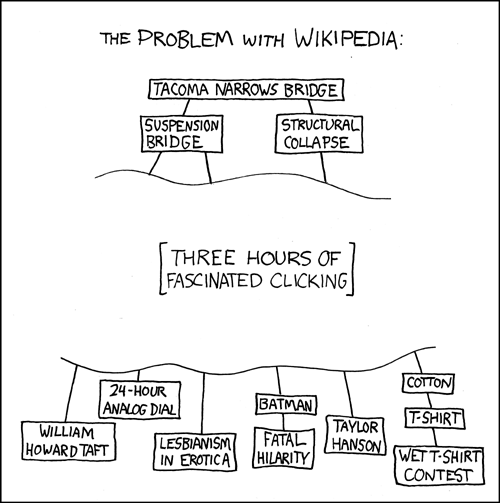
First, the idea.  That is the easy part.  In other words, the Aspie knows what he (the friends I questioned were all men) wants to write.  The problem comes in the how to write it:  they will put a word down, wonder if it is the most accurate one – and start ‘googling’ it. Wikipedia probably has some pretty good definitons of this – you should check it…. 

The problem with Wikipedia

OK, refocus.  Now you have the correct word.  So, how do you fit it into the sentence correctly?  Is that the right grammar?  Perhaps you should ‘google’ that….


OK, refocus.  You now have a noun and a verb, most likely in the proper grammatical structure.  But it is nowhere near sufficient to capture the meaning…  Perhaps it is time for lunch.

And so it goes.  Not very productive, but, eventually, some semblance of a sentence will be produced.

So, how can one help a child learn to overcome this?

My personal exerience gave me some insight.  I was lucky enough to be able to reproduce patterns – sound patterns and picture patterns.  This helped me get selected for a language school when I was 8 years old… and while I was struggling to write basic sentences in my native tonngue, miraculously, I did not experience the same problem in the new languages.

Perhaps advice from a teacher helped: 

‘Do not write what you want to say, write what you are able to say!’

With a limited vocabulary of less than 50 words, and only a rudimentary rules of how to construct a sentence according to the new language’s rules, the prospect of ‘writing a sentence’ became more managable!  With only a limited number of permutations possible, selecting the best possible combination of them which most effectively gets the point across became easy!

When my older son got to a point in his schooling where he was expected to construct more than just simple sentences, he started having a problem.  Trying to help him, I realized that he only had a very basic (and somewhat flawed) idea of how English grammar works….

Solution?

Basic textbook of Latin!

The reasons for selecting Latin were many:  from loan words down.  But the most important reason was that the Latin grammar was very explicitly spelled out – and that the endings of the words would change, depending on what role in the sentence that word played.  This is very key – it reinforces the rules of grammar, and helps figure out how to use them to construct a sentence.

My goal was not to teach my son Latin.  As a matter of fact, we spent no effort on memorizing vocabulary – we only focused on learning the rules for ‘flexing’ the words:  what does a particular ending mean – and what it tells us about the role this word plays in the sentence.  This skill was then easy to transpose into English sentence composition.

Yes – sentence composition.  Because that is how it has to be approached – this word is the subject.  This word describes the subject.  This word is the verb.  This word describes the verb….  and so on.

For younger kids, it might help to use tools:  on small, rectangular pieces of card paper, print a limited number of words related to the topic the child needs to write a sentence about.  Depending on the kid, start with 20-30.  Separate them according to their role in the sentence – it migh be very helpful to colour code them.  Nouns in one colour, verbs on another, pronouns, adverbs…so on.  Or, just separate them into piles. 

Then, when the child needs to write a sentence, let her/him pick out the right words and ‘build’ the sentence out of the ‘card words’.  Since only a very limited number of words are available, the child must be told the task is not to ‘answer the question’ – because that might seem impossible!  Explain to the child that the goal is to ‘build the best possible answer out of these words.  It will not be perfect – and it is not expected to be! Make it a game to try to create the best ‘best fit’ that could be done from this set of ‘card words’.

Once the sentence is created, the child can copy it – and use it as the answer. 

The word-pool can be altered, based on the topic. It can be increased or decreased, based on the child’s needs:  the more difficulties, the fewer words to pick from.  It is a tedious process, but it does work – or, at least, it worked in several instances when I have used it (not just with my own kids). 

My personal opinion is that it teaches several things: 

  • By limiting the pool of words, it makes ‘finding the right word’ easier – by making it OK to settle for the ‘best available word’.
  • By forcing the use of ‘different types’ (as signified by colours/piles of words, based on role played in the sentence) of words, the Aspie reinforces the proper use of grammar
  • This exercise builds one’s confidence in their ability to form sentences – which is much more important than most educators acknowledge.
  • Perhaps most importantly, it creates the habit to ‘write what you can, not what you want to’

It is not perfect, but this might help overcome the obsessive need to only write an ‘impossibly perfect’ sentence…

Learning to write is not easy for people with Asperger syndrome.  There are many obstacles in  their way:  from mechanical difficulties, to ‘holding onto their thought long enough to write it down’.  Add the desire for perfectioninsm in written expression…. 

Following the suggestions of professionals who know the child is the best way to help him or her learn to overcome the difficulties which are part and parcel of Aspergers.  Yet, if nothing seems to work, frustration levels are building, the child is unhappy… I know there were times when I would have tried just about anything!  And letting the child help sort the words just might take an edge off the frustration.

A letter to my PM

For those of you not following the Canadian struggle for free speech, this letter, which I emailed my Member of Parliament today, may seem a little confusing.  Here is a REALLY quick recap:

In order to provide disadvanteged groups easy and affordable access to legal protection agains illegal discrimination, Human Rights Commissions (HRCs) were established several decades ago:  one federal (Canadian, or CHRC) and one for each province.  These HRCs have, lately, been interpreting their mandate in unforseen ways, asserting that any speech which ‘potentially could’ have negative impact on individuals or groups because of their race, creed, disablitiy, and other reasons, must be censored and that this censorship overrules any rights of freedom of speech, freedom of press, freedom of thought.

Many individuals, and some media organizations, have been going through several years long legal battles in their defense of their inalienable rights.  Even the very people who originally created the HRCs have been apalled at the misuse of their powers in recent years…  What is even worse, recently released tribunal transcripts contain admissions by some HRC employees which suggest that in their zeal to pursue (and entrap) people whom they are investigating, criminal laws are being violated.  That is a serious matter, because no government agency should be allowed to break laws in order to enforce laws…

The Minister of Justice recently said what I understand to mean that as far as the Canadian Government is concerned, all is fine…hence, my letter.

Dear Mr. [MP], 

Thank you for your kind reply, in which you say you will direct my concern over the HRCs and their actions directly to the Minister of Justice.  It arrived at about the same time as the Minister of Justice made his position on this situation known….   

How unfortunate that the official Government position is based on a brief by Mr. Tsesis, who is not regarded highly among the experts in this area and whose disregard for supportable facts required to assess causality can clearly be seen in the document he produced. 

For example, Mr. Tsesis claims:  “[Hitler fomented] a mass delusion that Jews were responsible for bad times, and as a result, a Holocaust could be perpetrated against them without general opposition.”   This displays blatant ignorance of (or disregard for) the fact that during the 1930’s, Germany did indeed have ‘hate speech’ laws, which (ironically?) were almost identical to those we have in Canada today!  Jewish leaders in Germany in the 1930’s expressed satisfaction with the protections from persecution which they and their community received under these ‘hate speech’ laws. 

Since ‘hate speech’ laws were present in Germany of the 1930, proposing (as Mr. Tsesis does) that our current ‘hate speech’ laws are the one tool necessary to prevent another Holocaust-like event is an error of judgment at best, intentionally misleading at worst.  Either way, it clearly demonstrates the unsoundness of the conclusions in this document.   Basing our national Justice policy on it would be ill advised.

How embarrassing for our Government, to reveal that this is indeed its intention!  How embarrassing for our Minister of Justice!

 Yet, my original comment was not intended to request a simple review of the policies of the Human Rights Commissions by the Government.  It is essential that the Government maintain its ‘arm’s length’ distance from judicial and quasi-judicial bodies.  That should not change.   

The HRCs answer directly to the Parliament of Canada.  It is essential that the Parliament of Canada ensures that bodies such as the HRCs do indeed perform the tasks for which they had been created, and that they conduct themselves in accordance with the laws of Canada, the very laws they were created to uphold!  

 There is a widespread perception among the citizens of Canada that employees of these commissions may have broken criminal laws of Canada while performing investigations on behalf of the HRCs.  This perception is largely based on the information in legal documents, transcripts of hearings from the HRCs themselves.  These statements were given under oath, and in them an employee of the Canadian Human Rights Commission describes actions he took while acting on behalf of the HRC which appear to be a clear and direct breech of the criminal laws of Canada, as well as a blatant breech of the very ‘hate speech’ laws the CHRC was created to uphold.

 It is not, and must never become, tolerable for an Agent of the State to break the laws of the State while acting on behalf of the State.  In order to assure the integrity of our governance structures, it is essential that a full criminal investigation be launched immediately, to determine whether laws were indeed broken, or not. 

 If it is found that criminal laws were broken, a further in-depth investigation will be required to determine whether some rogue employees broke criminal laws on their own, or if the policies of this public institutions are the root causes of criminal behaviour by its employees – in which case, a full evaluation of all the procedures and methodologies of the HRCs would need to be done.  If a criminal investigation determines that laws were indeed broken, laying criminal charges will be required against every employee who broke our laws as well as against all supervisory personnel (currently or in the past employed by the HRC’s), who, through ignorance or complicity, allowed this illegal behaviour within their department to take place. 

 If the perception that criminal laws are being broken at the HRCs is erroneous, it is important that we, the citizens of Canada, see them exonerated, so that we may again place our trust in our government agencies and institutions.  

 This determination cannot be made without a full criminal investigation of the HRCs, their procedures, methodologies and practices, as well as of the conduct all of its employees, past and present.  Therefore, I ask that you, Mr. Poilievre, as my Member of Parliament to which the HRCs report directly, channel your efforts and energies to launching a full and thorough investigation into this whole mess.

 Thank you.

If you wish to read more on this saga, please see the excellent sites Blazing Catfur, Ezra Levant, Mark Steyn, Small Dead Animals, and many, many more…

Aspergers, drawing and art

Many kids with Aspergers do not enjoy drawing and colouring.  This could be due to the fact that many have less ‘handedness differentiation’ – neither hand has better developed control, so drawing (and eventually writing) is more difficult.  But there could be more to it than that.

Just as there seems to be a difficulty in translating thoughts into a written form, some Aspies experience a similar difficulty in translating visual images into a drawing.

This is strictly my own observation, and I am not aware of a connection between these two aspects in any professional literature, but I cannot but wonder if this is a different expression of one underlying problem.  Let me describe it a little bit.

My dad has never been diagnosed with Aspergers – nor has he ever sought an opinion on the topic.  However, I do see some similarities between the way he, my sons and I processes information – at least, in some instances.  When we were trying to figure out this whole ‘Aspergers’ thing, he shared with me something that happened to him, when he was about 10 years old.

Standards and teaching methods in school were a little differen in his days, and teachers were more authoritarian.  During an art class, a substitute teacher said they were to draw a picture of a pig and hand it in at the end of the class.   A simple assignment – right?  Except that nobody had ever taught him how to go about drawing a picture of a pig… and my dad simply could not figure out how to even start.

He sat there, for the whole period, without making a single mark on his sheet of paper.  The teacher was not pleased.  As a matter of fact, he got very angry.  My dad was smart and had high marks, but he was not the most compliant of students.  The teacher would not believe him when my dad said he did not know how to do draw a pig, and concluded this was simply defiance…  and to report to him after school for detention.

The detention?  My dad was to sit at his desk until he drew the picture of a pig, then he was to bring it to the teacher’s office.  Once that was done, he could go home.  But try as he might, he simply could not resolve the image of a pig into its componenet parts, which he could then draw.  So, he sat at his desk, for several hours.  Finally, the janitor took pity on him. 

He, too, found it hard to believe a kid could not figure out how to draw a pig, but when he saw my dad just sitting there, for hours, he took a plain piece of paper and a pencil, drew a rectangle for a body, a triangle with a dot for the head and an eye, four sticks coming out of the bottom of the rectangle for legs and a curly spring on the back for tail.  “Here” he said.  “A pig!”

This was a revelation to my dad!  He easily reproduced the simplified ‘pig’ onto his sheet of paper, brought it to the teacher, and was allowed to go home.  

I have since met several people who do not naturally have an ability to break down a visual image into subsets, individual lines, which could then be put onto paper.  However, they can be shown how to go about it, and learn the process – just that to be effective, this process of learning needs to take place when they are older than when most kids learn to draw. 

Similarly, many Aspies do not have a natural ability to break a thought into constituent parts that can be written down – we start looking up words, checking spelling and grammar, wonder about better ways of saying it…. and end up producing very few actual words…  Yet, like with drawing, this process can also be learned – and it, too, will only be effectively learned at a later age than that of non-Aspie peers.

Could it be the same ‘prioritization’ or ‘orderig’ of ‘stuff’ that is causing both effects?

Another connection between them:  once Aspies ‘learn’ this process, they do not simply ‘learn’ it, they often ‘master’ it, and become better at it than most other people.  And yes, some do become successful writers or artists… Eccentric, yes, but successful.

Is this simply ‘overcompensation’?  Or is there something else at play here?