Recent Comments
RSS feed


The ‘Richard Warman v FD/internet privacy’ appeal
December 1, 2010 — xanthippaThe ‘Richard Warman vs. FD/internet privacy’ appeal
Update: the Fourniers won the appeal! Warman is now seeking the ‘prima facie’ ruling…
While we walk through the landscape, we know we were climbing a hill, or crossing a meadow – but we so much a part of the landscape that we are often be unable to tell just how high the hill is, or how close to the summit we are. Yet, standing atop that hill, looking back at the land one has crossed, the features of the landscape are clear and easy to discern.
So it is with our journey through time…
When ‘history happens’ around us, we are usually so immersed in its details that the minutiae obscure the ‘summits’ which, when future generations look back into our era, will be considered the ‘defining events’. It is my never-humble-opinion that the legal precedent which will be set in this case will, if not a ‘mountain’, be a ‘hill’ in the landscape of our time.
That is why, on the 8th of April, 2010, I went to see history made, with my own eyes. It is taking me many posts to describe my observations (and some background material) of this event. This page will serve as an index: I will keep adding links to my posts on this topic as I create them.
First – Connie Fournier’s observations of the event were first posted on FreeDominion, then, with her permission, re-posted by me in two parts, here and here.
It is undeniable that I felt the tension of the importance of this event, and attempted to relieve some of it by presenting a tongue-in-cheek description of first, my quest to find the correct courtroom, then of waiting for the hearing to begin.
But the time for humour (if you are generous enough to call it that) was over when the proceedings began.
First, introductions of the people there that day are here.
Next, an overview of the raw facts of this case is here.
A ‘softer’ overview (commentary) of what this case is about is here.
For those of us not schooled in the law,(coming) is an overview of the legal terms which (in my layman’s opinion) define the case as well as some of the cases cited as legal precedents:
Also coming will be the my observations of the presentations. …this page will be updated as this happens. I apologize for taking so long getting the info up – I am a slow writer… More ‘stuff’ coming soon!
People are not depressed because they are alone – people are alone because they are depressed
November 17, 2010 — xanthippaContinued from ‘Depression’ is ‘not being able to feel’
Some people think that people become depressed if they don’t have enough friends or relatives around. Many times have I heard people say that if such and such was not alone, he/she would not be so depressed. This is a basic misunderstanding of the nature of depression: putting the cart before the horse, so to speak.
Here, I am not speaking of a natural grieving process – a sound support system is helpful there. Nor am I speaking of other specific mental illnesses like schizophrenia or bi-polar disorder and so on, but only about the one many doctors term ‘garden-variety depression’: where an otherwise healthy brain fails to function properly because of an imbalance or shortage of specific neurotransmitters.
From an evolutionary point of view: our brains have, as their deepest goal, to keep us alive, as best and for as long as possible.
‘Pleasure’ is nice – it is our brain’s reward for ‘good’ behaviours. From foods that nurture us best to reproduction to forming the social bonds which aid our long-term survival – these are all the types of ‘good’ behaviours which aid our long-term survival and propagation as a species. Our brains reward these ‘good’ behaviours by directing the neurotransmitters to activate the ‘pleasure’ and ‘feel good’ centres of the brain. That is how we feel pleasure and happiness.
These behaviours, however important in the long-term, are not helpful in urgent ‘short-term’ survival of ‘fight-and/or-flight’ type situations. When faced with an immediate threat, a person has to react quickly and effectively, or the long-term benefits become rather irrelevant.
These ‘danger’ type situations, out of this necessity for immediate survival, ‘anger’, ‘fear’ and related feelings are capable of being triggered even when the neurotransmitter levels in the brain are too low to trigger the ‘long-term-benefit’ reward ones.
That is why people who are depressed – who are suffering from a physical shortage/imbalance of the neurotransmitters in the brain – stop feeling ‘pleasure’ and ‘happiness’ before they stop feeling ‘anger’ and ‘fear’, and even, at times, the feeling of ‘self-pity’…
Which also explains why, very often, these people end up alone.
This emptiness of ‘not feeling’ is horrible – it is like one’s body is mechanically walking through life while the self/soul is in a coma. Most people will do just about anything to avoid this desolate emptiness of ‘not feeling’.
Some people react to this ‘inability to feel’ by isolating themselves from friends and other experiences, in order not to be reminded that they can no longer feel. The memory of the experience – while being unable to feel it now – is so painful, these people will avoid any ‘opportunity to feel’. They will keep busy with tasks that do not evoke emotions to the exclusion of everything else – or they will simply withdraw from ‘experiencing life’.
Other people deal with this emptiness by trying to evoke even echoes of their earlier experiences. They will seek behaviours which, when they were well, made them feel ‘most intensely alive’: from thrill-seeking on down. Needless to say, this may become self-destructive.
These people will soon find that as the neurotransmitter levels decrease, they will need more intense experiences to get even an echo of a ‘feeling’. And, since the ‘fight-and/or-flight’ responses take the lowest levels of neurotransmitters to make a person ‘feel’, many people spiraling down into a depression will try to evoke those emotions – it’s their ‘last chance to feel’.
This usually means ‘picking fights’ and starting arguments – arguments deep and angry enough to evoke those ‘fight-and/or-flight’ responses in their brain!
Because even the most negative feelings are like a balm for the soul which is unable to ‘feel’!
Of course, this tends to be hard on the people around such a person… Seeing the anger and facing constant arguments and fights – and no positive emotions in the ill person, no positive feedback – that will drive just about everyone away!
Therefore, people are not depressed because they are alone – people are alone because they are depressed!
This is why it is essential that when people notice a loved one is either withdrawing from ‘life’ or seems constantly angry and filled with only strong negative emotions, they get them help from medical professionals.
Depression is a physiological deficiency of specific chemicals, just like deficiencies in other parts of the body are. It strikes people in all walks of life – and of all ages, including children.
It needs to be diagnosed and treated by medical professionals. And the person will need to remain on any medication they are prescribed for as long as their own body is not making the ‘proper’ balance of them.
Like a diabetic may take insulin to function properly, so does a person suffering from depression.
And, just like there are some diabetics who, after getting their diabetes under control can, perhaps, maintain control over their condition without the need to take insulin regularly, some people with depression may be able to do the same thing.
But, this is not possible for all diabetics. Nor it is an option for everyone suffering from depression. The medicine may be different, the organ affected may be different, but the underlying medical problem is ‘the same’: their body is not making enough of some things for all parts of the body to function properly.
Just as one would not fault a diabetic for needing insulin for the rest of their life, one ought not demand that a person ‘should get off’ of anti-depressant medication after some period of time. It is not a question of ‘toughness’ or ‘weakness’ or ‘willingness to try’: it is a function of the medical condition itself and must be understood in those terms.
Depression is a terrible thing to experience.
Let’s try to use information to shed some light on it in the hope that it will help somebody seek the proper help. If you have some things related to depression you’d like to share, please, leave a comment!
‘Depression’ is ‘not being able to feel’
November 17, 2010 — xanthippaWhen we say someone ‘is depressed’, we are describing a set of symptoms visible to ‘the outside’. However, just like with so many other conditions related to brain chemistry, this is a bit of the old ‘can’t-put-weight-on-foot syndrome’: a single set of symptoms is the only visible result of a number of various and quite different things which are going on deep within the brain.
What I wish to address here is what medical doctors often refer to as ‘garden variety depression’: not a manic-depressive, bi-polar disorder (though, there is a distant parallel, it is not the same thing), not another type of mental illness (like schizophrenia) which may, at times, cause depression-like symptoms, nor am I writing about a natural grieving process.
Having said what I am not writing about, I find it difficult to start – there are so many really important points to make, things which people who are near and dear to those who may be suffering from depression (as well as the sufferers themselves) need to know…
Imagine having a sinus infection: your nose is so stuffed up, you cannot smell a single thing. Even if the smell-receptors were not gucked up with mucus, preventing them from functioning, your whole nasal passages are so filled with solid-seeming stuff that no air can enter them. Now, imagine that you are eating your most favoritest food in the world!
What is it like?
The food – though as good as ever – will not evoke the same experience in you as you eat is as it does when you are well.
I could go into a long description here – but I trust I don’t need to….suffice it to say, the health condition is physically interfering with one’s ability to fully experience the food.
Depression – however it is triggered (there are many ways to ‘get there’) – is a little bit similar: the ability to experience emotions – all emotions – is severely depressed….hence, ‘depression’…. Like in the above example, the health condition is physically interfering with one’s ability to fully experience life.
In other words, ‘depression’ is not ‘feeling sad’ or ‘feeling sorry for oneself’ – depression is the physical inability to ‘feel’.
Of course, there are various levels – from mild to severe.
But, the underlying problem is the same.
It is based on a chemical imbalance in the brain. It is a physical problem, which cannot be solved by ‘positive thinking’ or ‘pulling oneself together’ or ‘having friends’ or any such common misconceptions…
And a problem it is: there is nothing more horrible for a human than to be unable to ‘feel’.
It is worse than death.
Unless one has experienced it themselves, it is impossible to fully comprehend the devastation of the desolate existence: one does all the things that made one feel alive – and can no longer ‘feel’ them!
Oh, just like with the food: one can ‘recognize’ the taste and texture is there – but it is not the same, it is not experienced fully, it is not ‘living’.
You can mechanically sense the physical experience – but the brain is lacking the proper chemicals to fire up the ‘sensation’ centres, the ‘feel good/feel bad’ areas of the brain, so the experience is hollow and not properly ‘felt’!
* * *
This inability to feel is not limited to one area of sensations: it is an all-encompassing numbness.
This ‘feeling’ things – from the love of those around us, to the pleasure of seeing a pretty sunset – these feelings are the colouring of our life-experiences which defines each and every one of us as the individuals we are, it makes us unique, it makes us ‘us’. That is why loosing the ability to experience this facet of experience is so devastating to people: it strips us of our ‘self’.
It is as if your body is going through the motions of life, but your self/soul is in a coma.
People who are suffering like this will do just about anything to recapture their ability to ‘feel’, to wake up from this walking coma.
Anything!
So, many people who are slipping into a depression will go to great lengths to do the things which, before they were depressed, made them ‘feel’ with the greatest intensity: from risky and destructive behaviour, perhaps seeking a lot of sex or drugs or even abusive relationships, to eating food they liked, and so on. By doing the things which made them ‘feel’ the most intensely, they are attempting to recapture at least the echo of ‘feeling’.
This is not going to work for long: they can feel their pulse rise, the physiological reactions in the body will be there. But, if there isn’t enough neurotransmitters in the brain to fire up the pleasure/fear centres of the brain, their experience will not be ‘felt’ and will leave them more empty and hollow than before!
Other people will try to avoid the situations which remind them that they are not ‘feeling’ things like they used to. They will avoid friends and places that made them happy, because they cannot face remembering what it was like to ‘feel’ – and that they can no longer do it.
Either way – depression is a serious medical condition with real, physiological causes. Medical professionals are the ones who are trained to sort through the symptoms and find the best way to treat it. Getting medical help is essential for one to beat depression!
…continued at ‘People are not depressed because they are alone – people are alone because they are depressed’
Cheer the world up – one person at a time!
November 10, 2010 — xanthippaDo you want to cheer up someone who needs it?
Theo Sparks says his Mum needs cheering up and asks people to send her a card…
Prostituting the legal system….
September 29, 2010 — xanthippaYesterday, a Toronto judge struck down as unconstitutional three laws which many Canadians regarded as the key legislation against prostitution.
I have been rather preoccupied in publishing the responses Ottawa Municipal election candidates have sent me as an answer to the questions I asked them (it took me about 50 hours to develop the list of questions itself – I was not about to slack off on posting any and all responses I got to it!!!). As such, I have not really had much of a chance to see the reactions to the ruling….. In other words, my ‘take’ on it is not influenced by having noted any of the reactions to it ‘out there’!
Well, the government which governs the least, governs the best!
The legal situation, as it was before this ruling, was ridiculous beyond belief!
The logic – if one can call it that – of the laws surrounding ‘prostitution’ in Ontario was so twisted, it is about time they were struck down!
‘Prostitution’ itself was not illegal in Canada. Perhaps it was because even the lawmakers understood that their jurisdiction does not extend to governing our bodies (OK – they still need to figure this out with respect to what I choose to put inside it, from sugar or salt of hydrogenated oils to any other chemical compound), perhaps there is something else – I am simply not legally informed enough to know this. The fact remains that Ontario had no law which made ‘prostitution’ ‘illegal’.
However, there was a catch….
There were three laws which made it illegal to:
- enter into a contract regarding prostitution (solicitation)
- to accept, as payment, money earned through prostitution (living off the avails of prostitution)
- to practice prostitution indoors (operate a house of prostitution)
Yes, for many people whose religious beliefs condemn prostitution, the term is highly charged. If so, I would like to invite you to simply replace the term with something which will permit you to evaluate the legal situation more impartially.
Again, I stress that this is NOT to be an evaluation of ‘prostitution’: only of the legal mess ‘governing’ it. These are two separate matters. One is a matter of morality – something each person should arrive at their own conclusions about. The other is the quality (or lack thereof) of laws Ontario and Canada have on this activity.
This ‘exercise’ is only meant to address the laws themselves – not the practice they address.
So, we have:
- an activity which is not illegal
BUT
- entering into a legal contract regarding this legal activity is illegal
In what world does THAT make sense?
We also have
- a perfectly legal activity
BUT
- even though it does not present any greater danger to participate in said activity indoors (like, say, storing bbq-gas-tanks would), it is illegal to have an indoor place to participate in it
D-ugh!?!?!?!
Again, this is a logically inconsistent law.
Oh, I understand the intent of it! After all, when it is -40 degrees outside, being forced to perform sexual acts outdoors tends to shrink the practice….
But that is, at best, a dishonest law! The lawmakers knew they could not get away with outlawing the practice, as it would breech a person’s inherent rights to do with their own body as they please, so they try to slime their way out of it!!! Shame on them!
And, perhaps most ridiculously, we have
- a perfectly legal activity to earn income
BUT
- it is illegal to spend any money earned this way AND it is illegal for a person to accept, as payment for services rendered, any money earned through this activity by their customer
In other words, if a prostitute hired a book-keeper, and this book-keeper accepted (as payment for her/his services in providing bookkeeping) money that their client earned through prostitution, it is the book-keeper who had committed an illegal act!
Of course, book-keepers are not the only ones who could be criminally charged not because of anything THEY did themselves, but because their clients earned their money through one specific – perfectly legal – activity!!!
If a prostitute had a cleaning-lady, the cleaning-lady (or cleaning-gentleman: I once knew a couple who earned their living this way together, so I want to make sure to be inclusive here), this person could ALSO be facing criminal charges. NOT for something he or she did – but because of the specific legal way their boss earned the money he or she paid them with.
Same goes for cooks, babysitters, body-guards, hairdressers, or any other service provider. WHAT they did was irrelevant. HOW their client earned their money could make them face criminal charges!
THOSE WERE BAD LAWS!!!
(…and that is using very mild language….)
Aside: Please, remember ‘Xanthippa’s First Law of Human Dynamics’ – each and every law (or rule) WILL, eventually, be applied to its maximum potential illogical extreme!
Under these laws, a lawyer who was hired to represent a bank-robber – and was paid with illegally acquired money – would NOT be breaking the laws…..but a lawyer hired by a prostitute and paid with LEGALLY EARNED money COULD face criminal charges!!!!
However you look at it, these laws were in serious need of being struck down.
So, what about the morality of prostitution?
What does THAT matter?!?!?!?
Governments must NEVER be permitted to legislate MORALITY!!!!
Videos from Watson/McGuinty accountability rally 18th of September, 2010
September 19, 2010 — xanthippaMy photos are here.
Here are the videos from BigBlueWave:
VideoManOttawa also has videos from the rally: here, here, here, here, here, here, here, here, her, here, here, here, here, here and here.
Danno’s channel (The Unsustainable Taxpayer) also has videos: Part 1 of 3 (intro), 2 of 3 and 3 of 3(will update when link is up).
Thank you, all, for posting the videos!
Photos from Watson/McGuinty protest rally on September 18th, 2010
September 18, 2010 — xanthippa(Updated to include a video link)
Today, there was a protest at Jim Watson’s election office. I was there, taking photos.
(And, yes – they even let me say a few words….but I was so nervous, having NEVER spoken in public before, I covered barely a quarter of the stuff I prepared. Some people took videos – I’ll post them when I see them.) As always, the ladies organizing the rally were there (and I DO use the term ‘ladies’ in the best sense).
Debbie Jodoin: 
Shirley Mosley used puppets to illustrate how Mr. McGuinty’s puppet, Mr. Watson, hippety-hoppeties from Municipal to Provincial to Municipal politics: 
Mr. Nick Vandergraght was a crowd favourite: 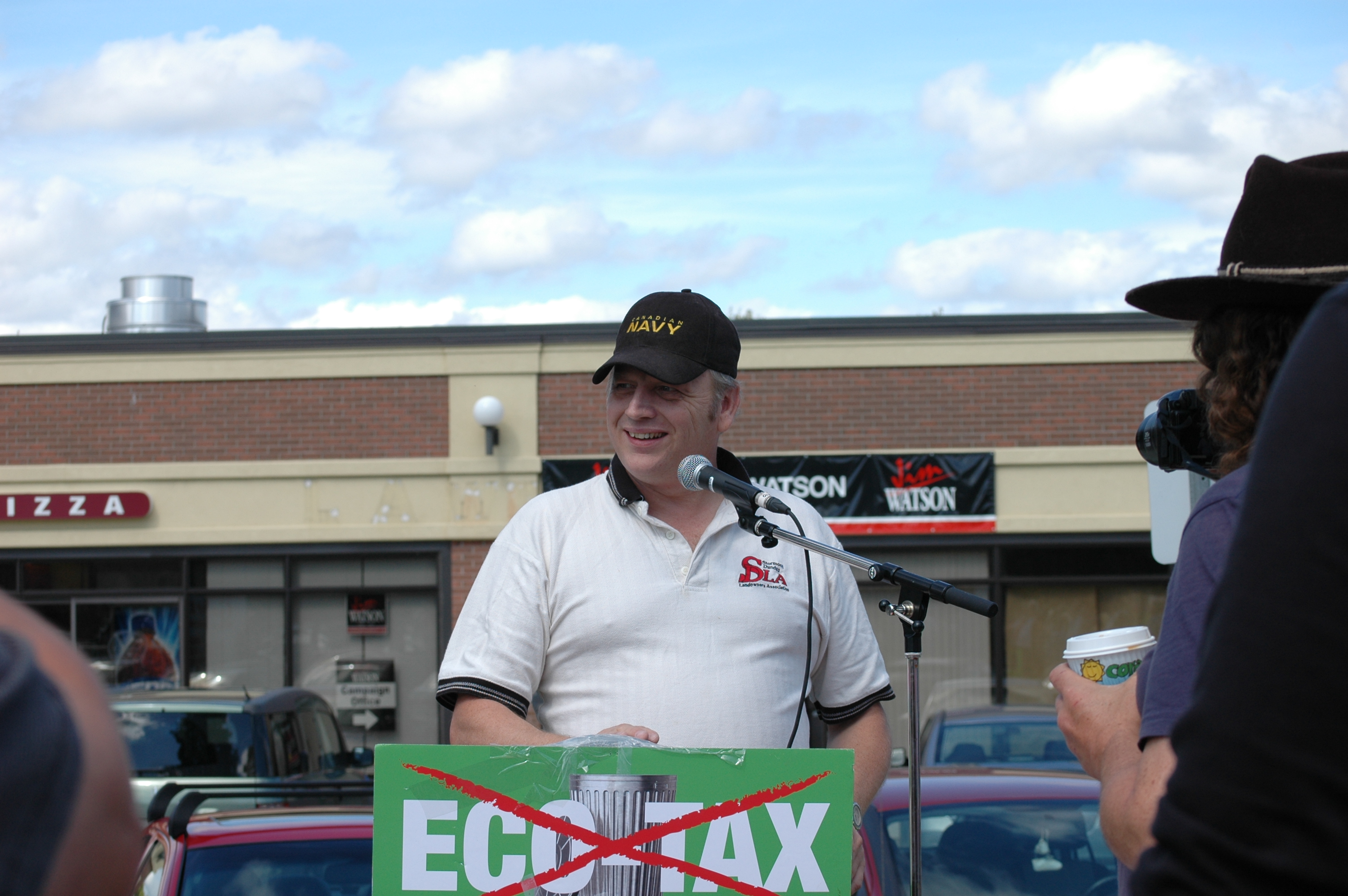
As was Sharon, also from CFRA: 
Ruth Parent, a behind-the-scenes helper to Debbie and Shirley during these protests also said a few words: 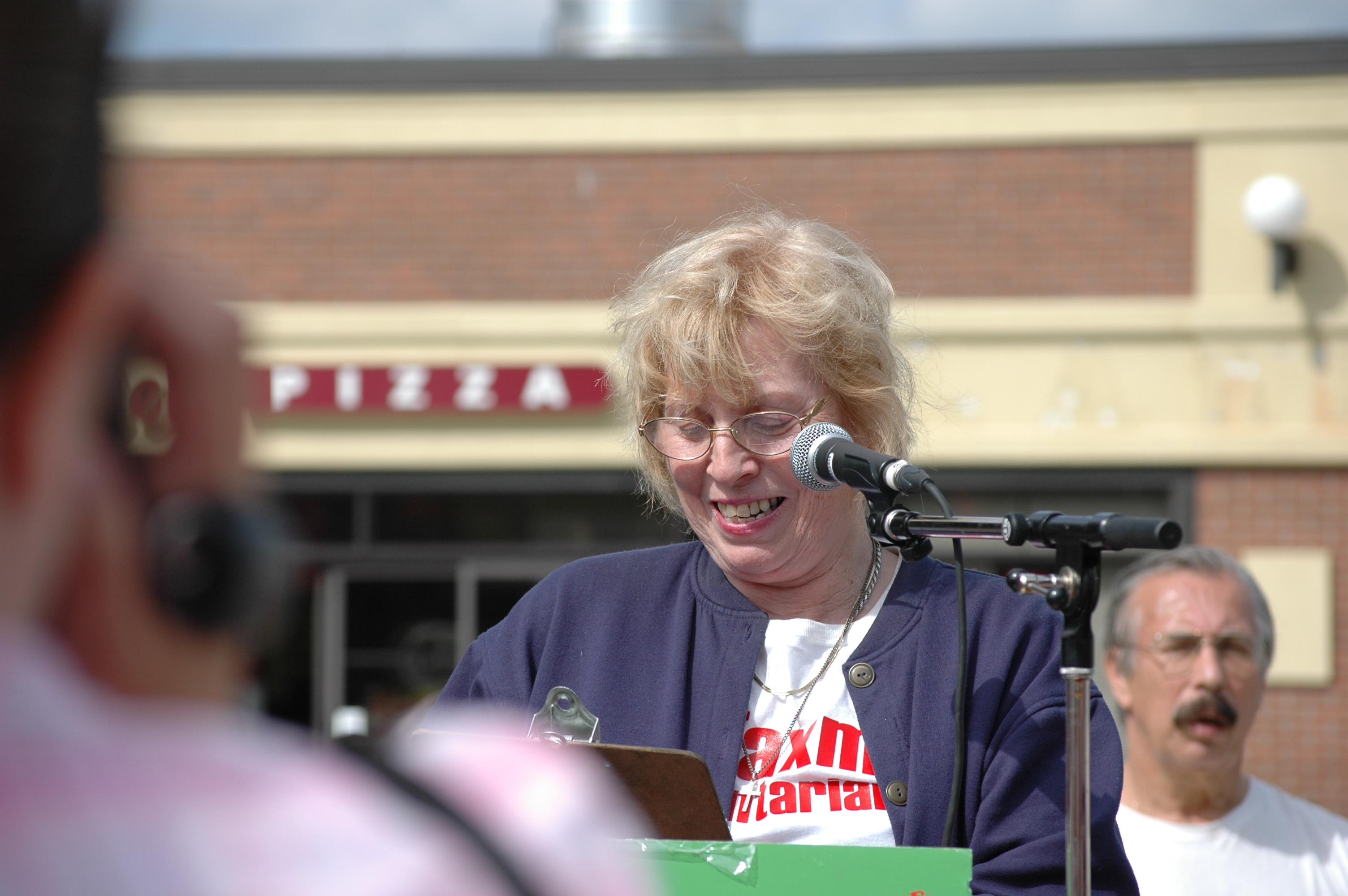
And, ‘Debbie’s sound guy’ – who has a YouTube channel called ‘TheUnsustainableTaxpayer’ where he uploads the videos from the protest, also spoke passionately: 
Despite technical difficulties, Sam also spoke:

A very pleasant surprise was that ‘Calculus’ (as he is known on this blog) came and said hello (our first real-life meeting ever):  Suzanne from BigBlueWave also said hi to me: when her video is up, I’ll post it! And, of course, there were many ‘disgruntled citizens’, exercising their freedom:
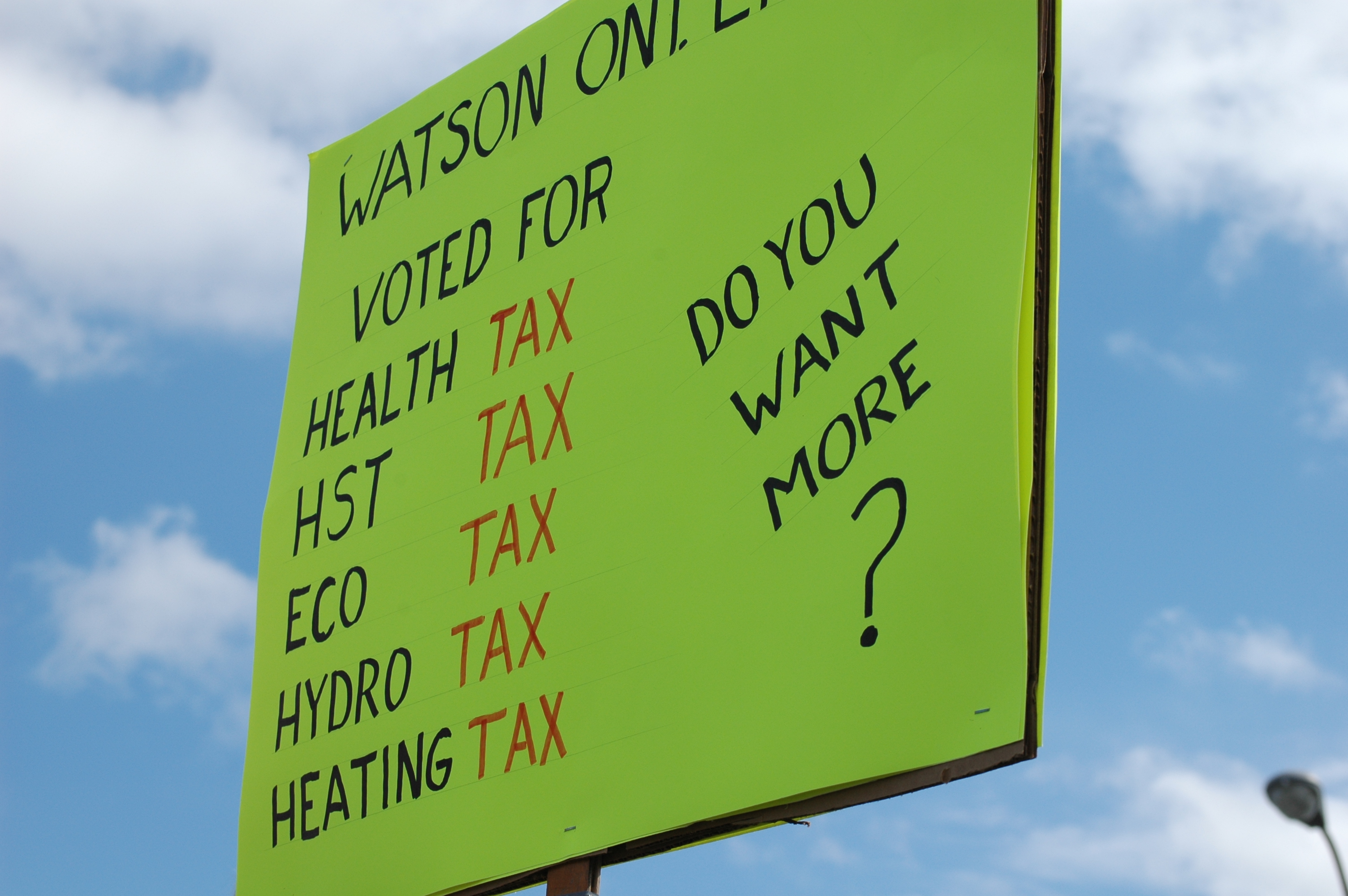

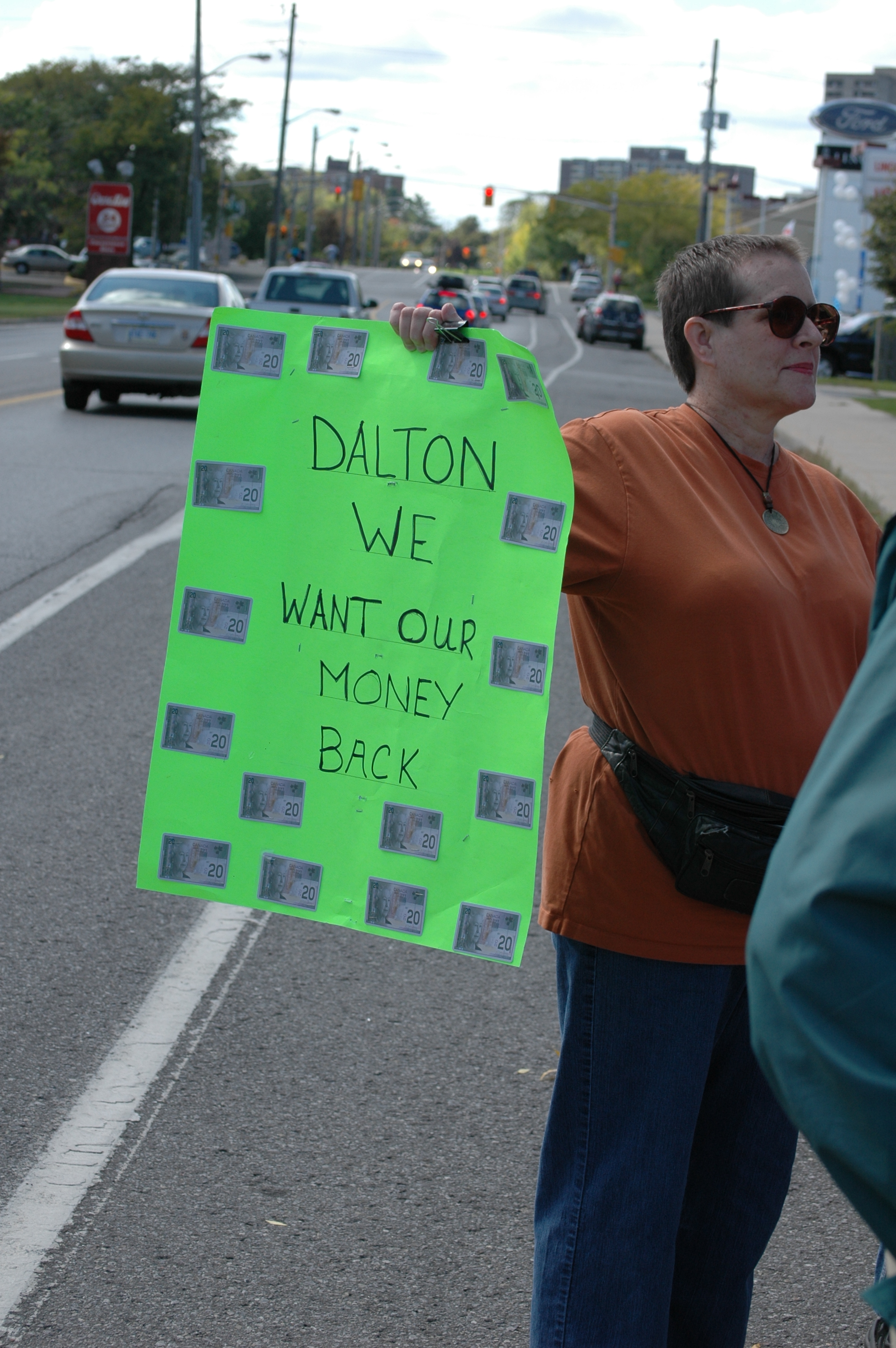
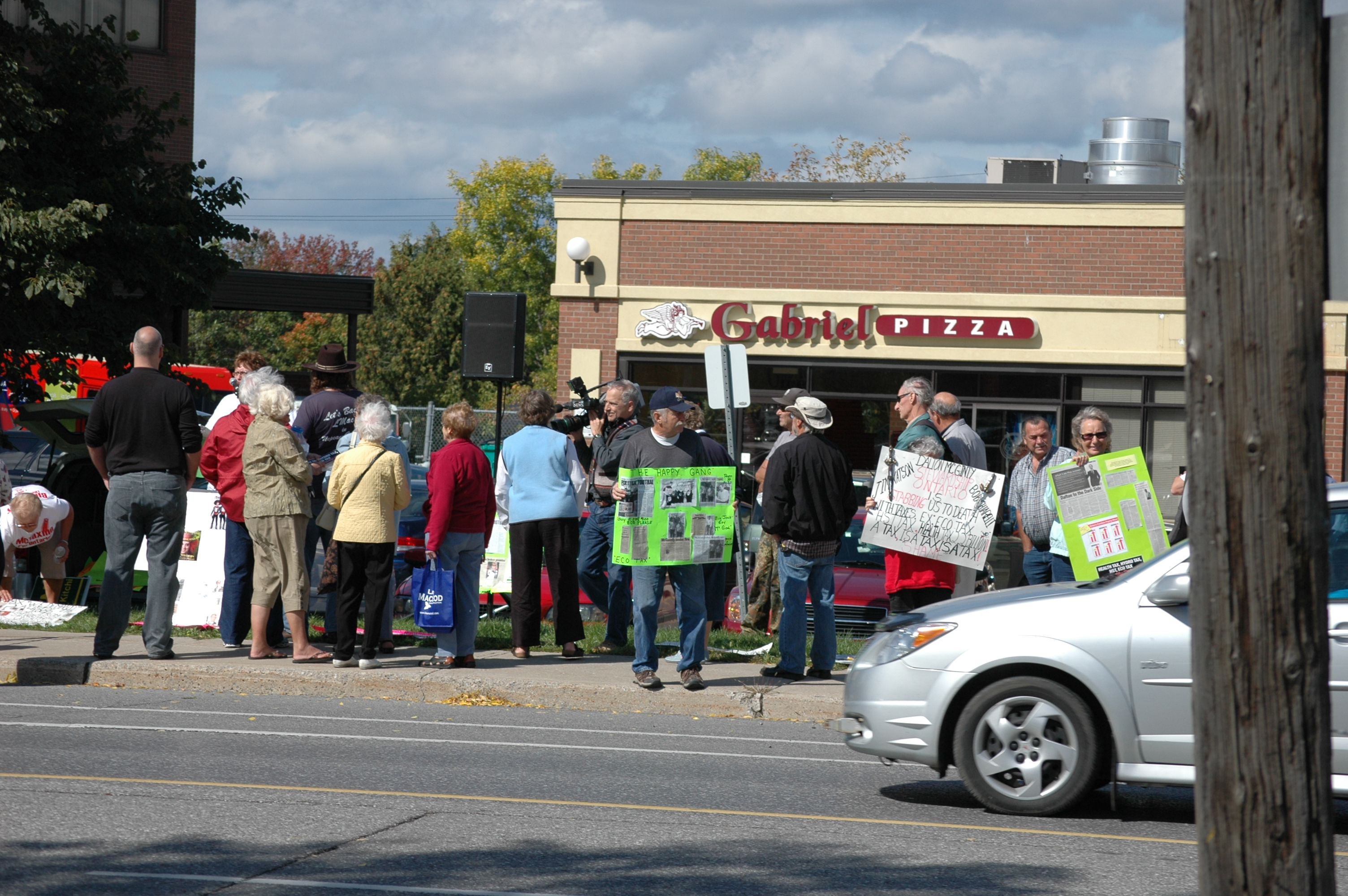

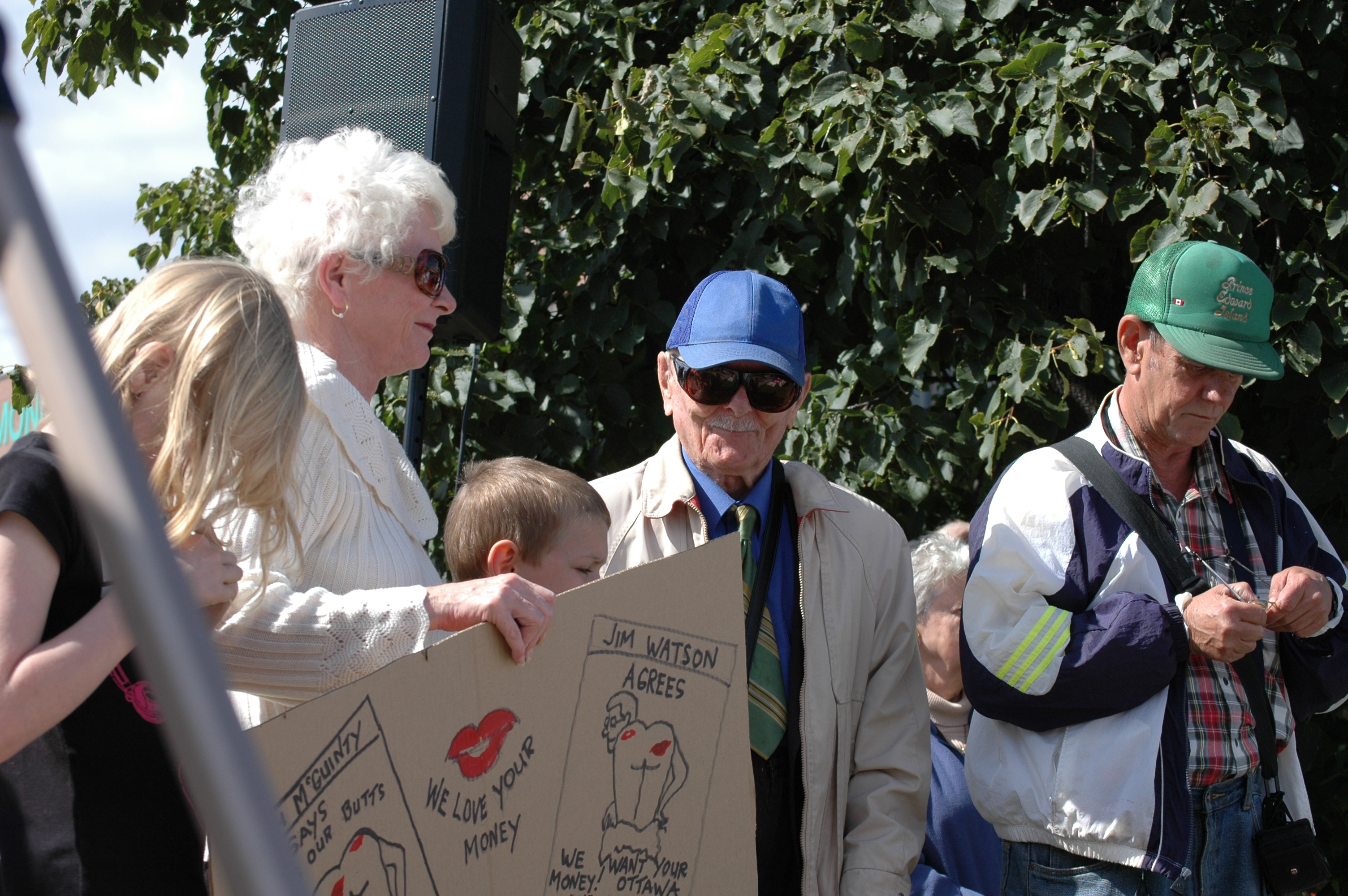
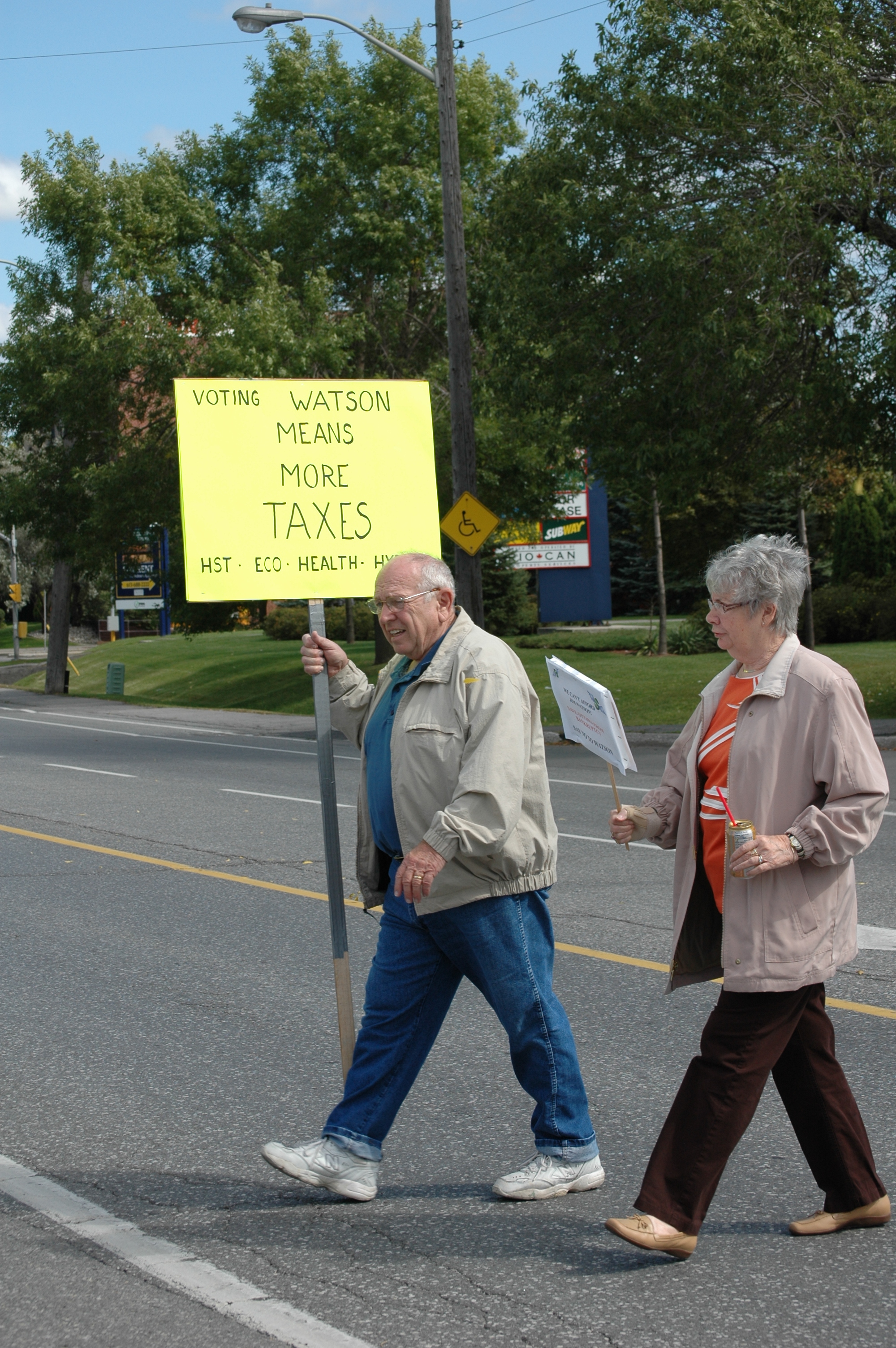

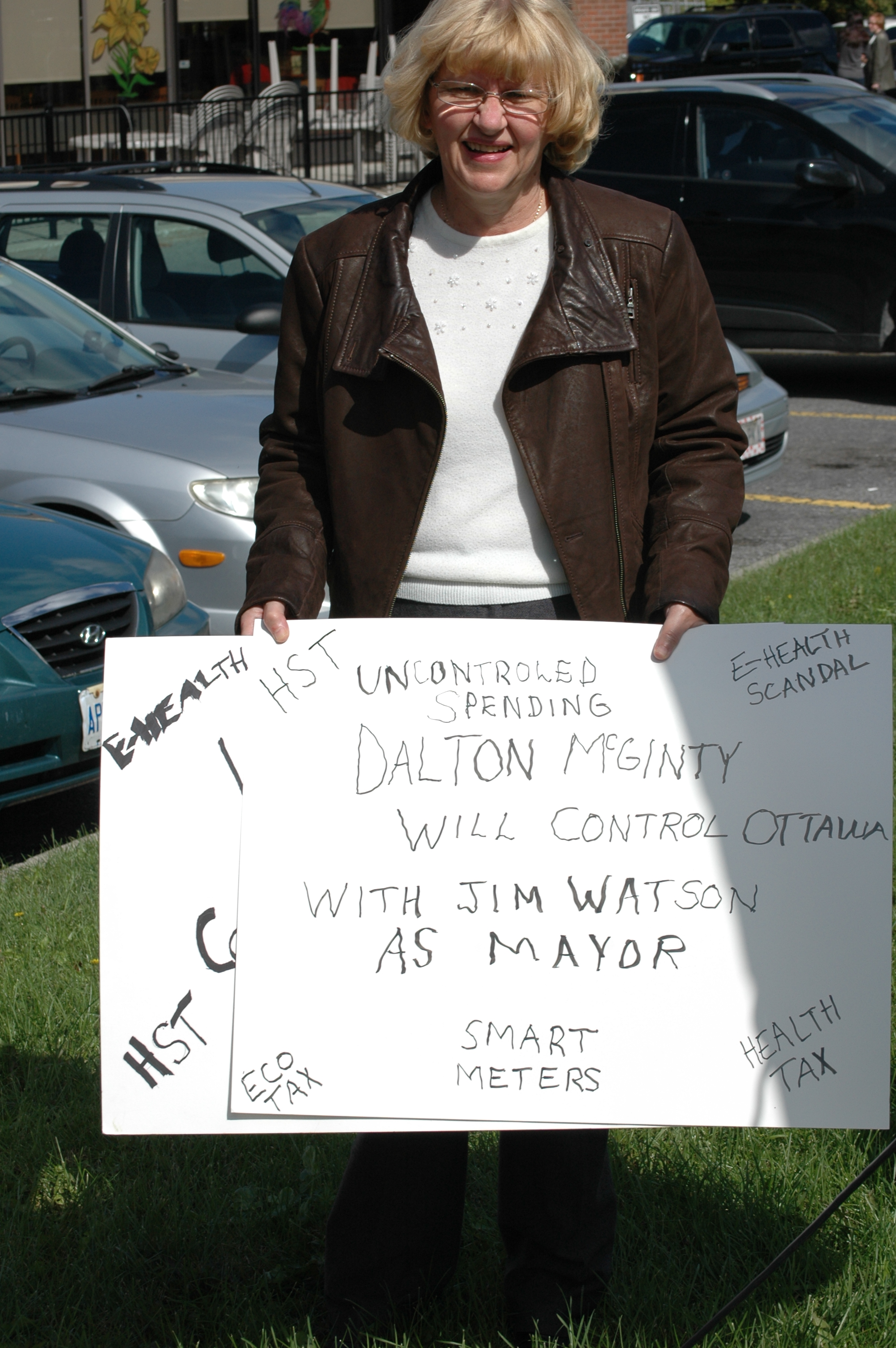
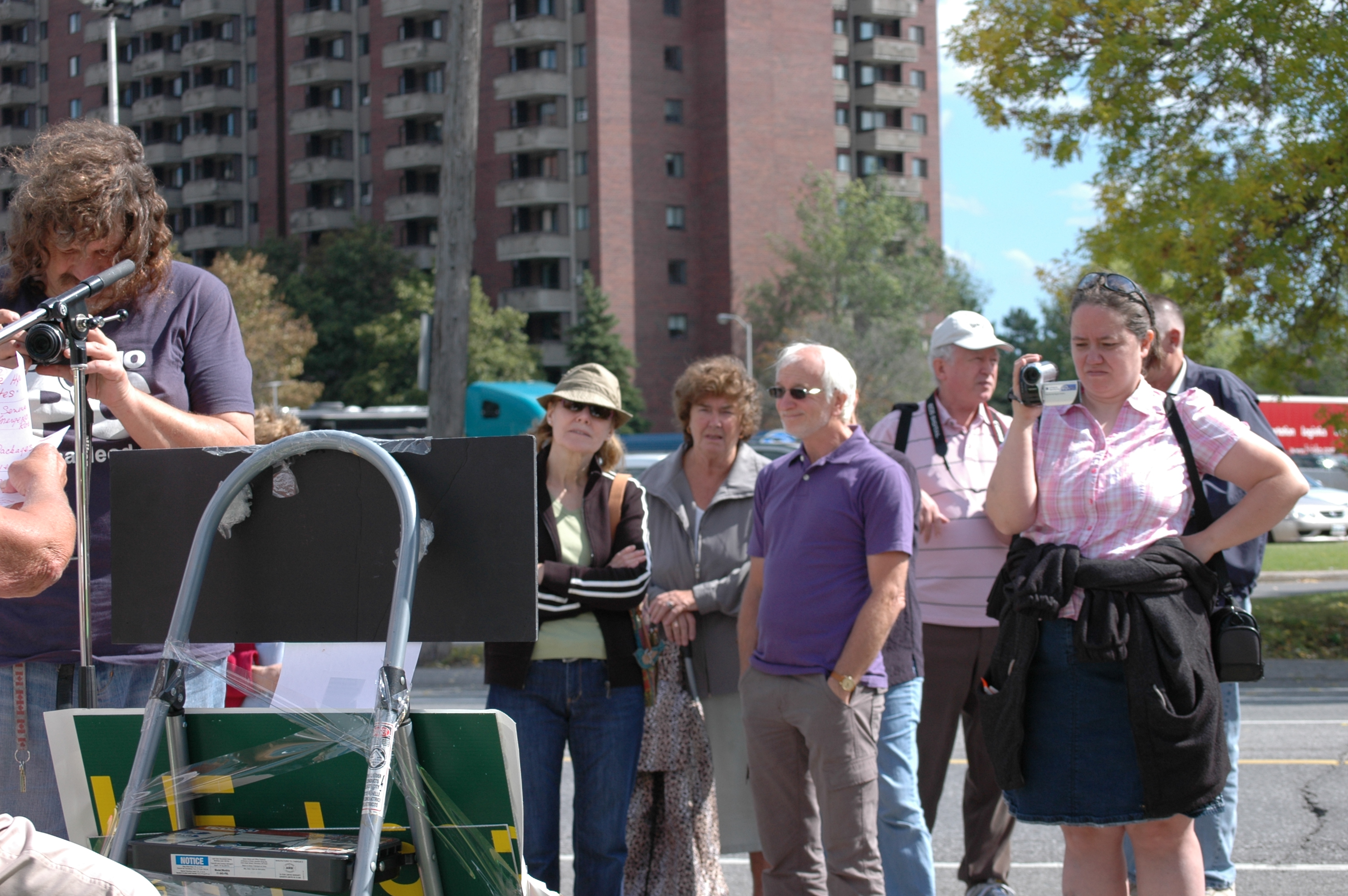
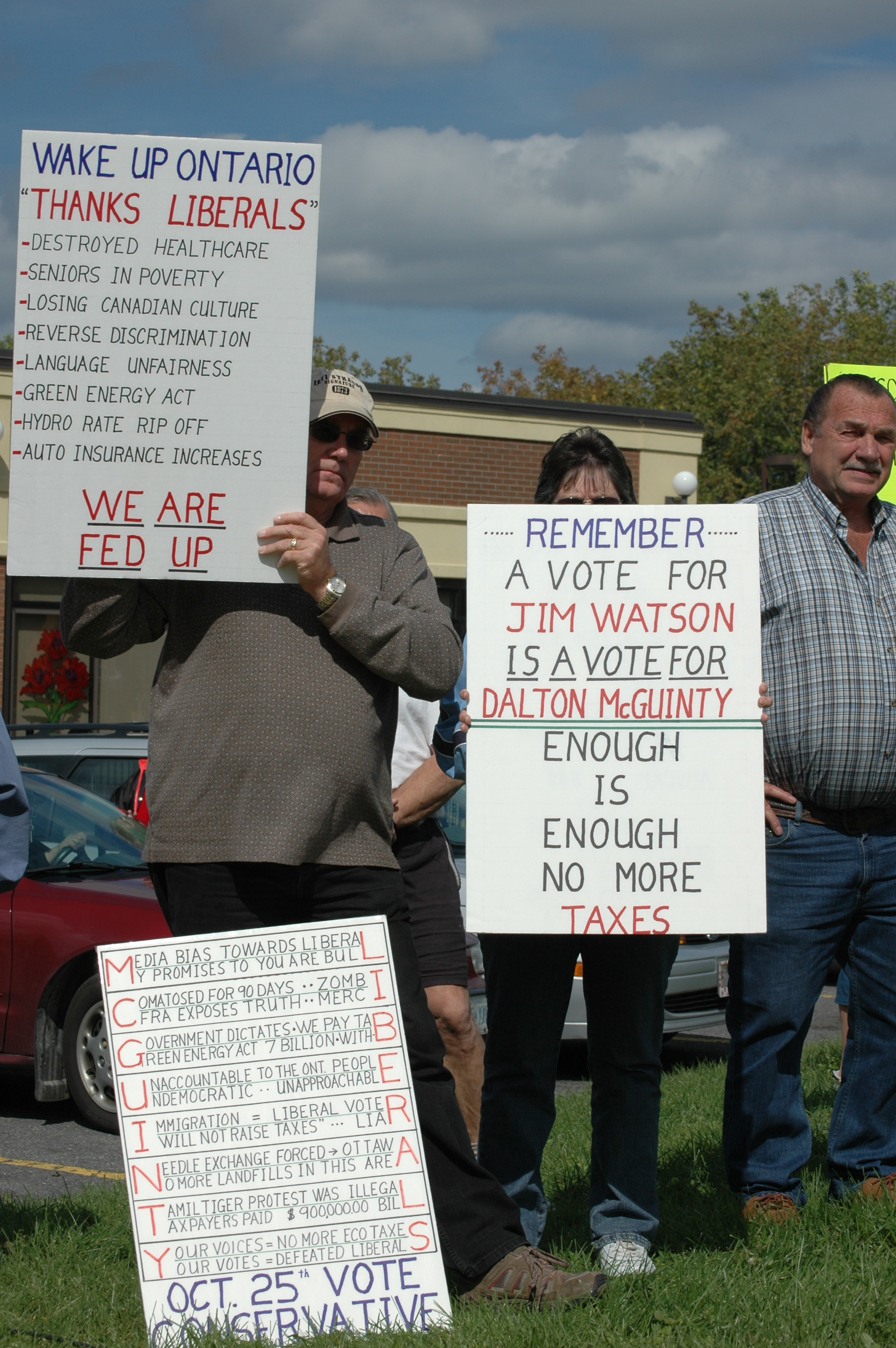
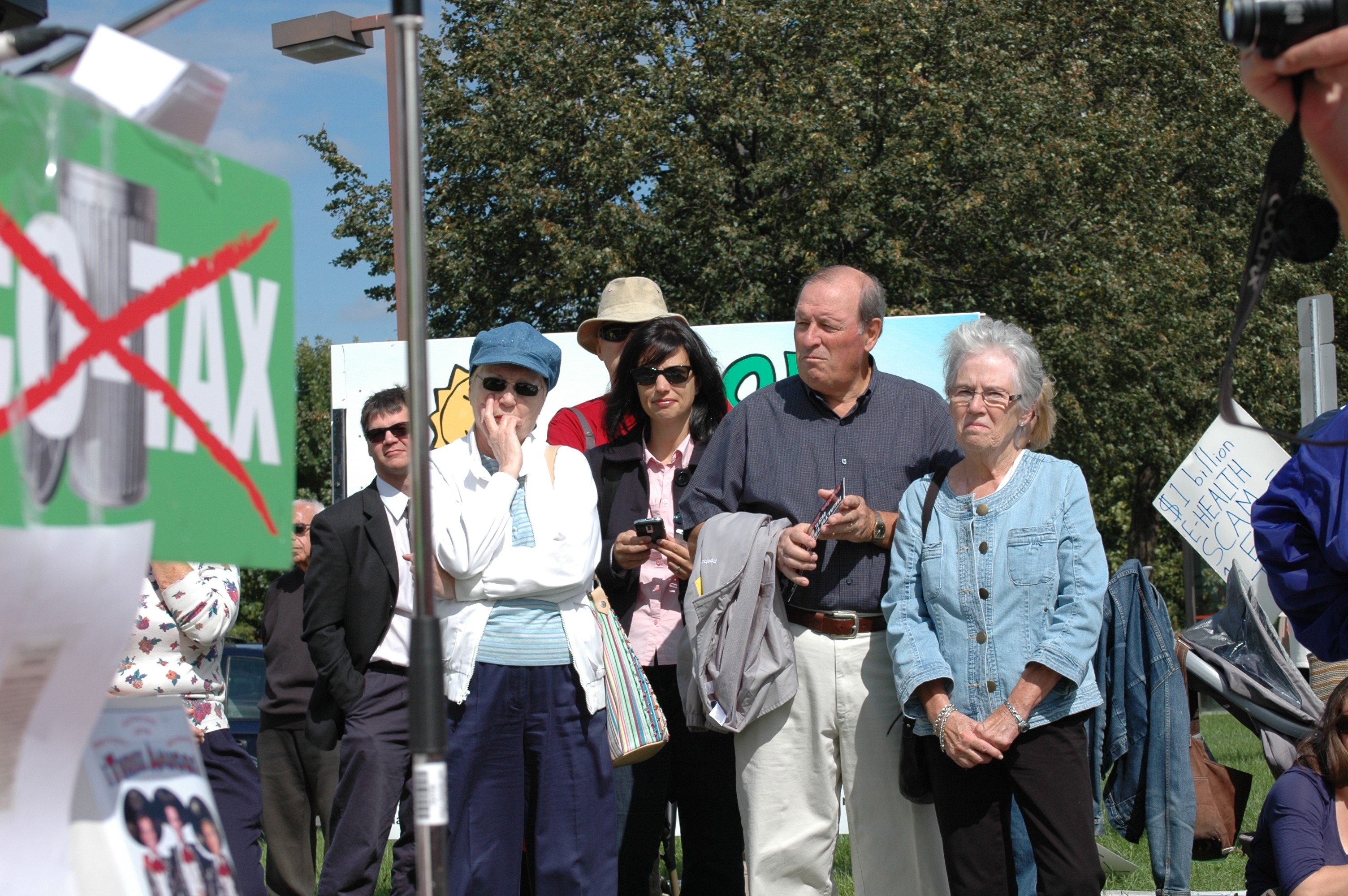

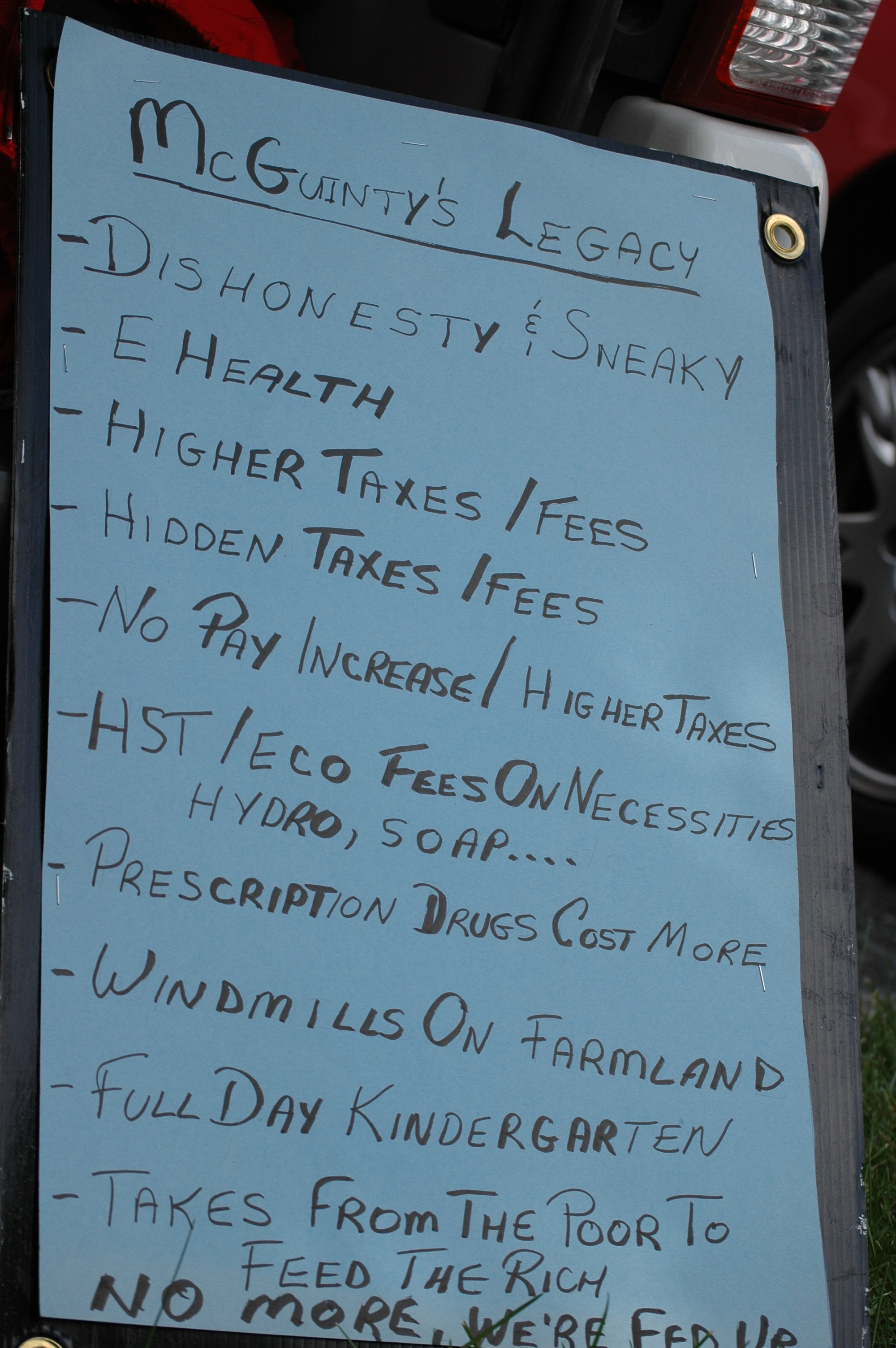
As usual, if you want any of these (or of the 200 or so other pictures I took) in higher resolution, comment and I will contact you with the pictures requested.
The videos will be posted as they come online.
Mosque being built on top of Christian cemetery – and NOT in New York
September 3, 2010 — xanthippaHave you ever heard of a Muslim cleric named Mirza Abdul Ghani?
When India and Pakistan were partitioned in 1947, some provisions were made for ‘hallow’ land (like, say, cemeteries) of religious minorities. This was the case with a Christian cemetery off New Rasool Road in Mandi Bhawaldin, Pakistan.
16 years ago, Mirza Abdul Ghani, the above mentioned Muslim cleric, decided to build a Mosque on the land legally set aside for the local Christian cemetery. The local Christians were not particularly thrilled with this interfaith outreach – but they were intimidated into silence with threats.
So, the mosque was built. The constitution of Pakistan forbids the demolition of places of worship, so the mosque has stood there ever since.
Three months ago, Mr. Ghani began building an addition to the mosque – complete, with basement. The addition is reported to also include ‘shops’.
When the local Christians realized what was happening and that more graves were being desecrated and destroyed, they sought and received a legal injunction which ordered that all work be stopped. The cleric and his crew have ignored the injunction and the project is reportedly nearly complete; they are at the ‘plastering stage’.
Of course, once built – there is nothing anyone can do…
Next time you have musings about the tack record on the levels of sensitivity to desecrating hallow ground of other people by Muslim clerics intent on building mosques – think of the town of Mandi Bhawaldin and Mr. Ghani’s little mosque on the cemetery!
More abuse of copyright laws…
September 1, 2010 — xanthippaEach and every law, by-law and rule WILL eventually be stretched way beyond its intended purpose – so much so, its intended purpose may be completely obscured or even lost. (I like to call that Xanthippa’s first law of human dynamics.)
And, it is to be expected – this is part of human nature.
As long as we are trying to just sort of get along, we talk and argue, win some and loose some, but, usually, over the long time, things usually even out. Not all people are nice and fair – but, the vast majority of humans are at least somewhat empathetic and when they are ‘getting along’ with each other, one-on-one, most of the time, most people will be mostly fair.
That is how communities are built. And if there is one thing we, humans, do, it is building communities!
This all changes once we get ‘rules’ and ‘laws’ written down.
Why?
Because now, it is no longer about ‘getting along with other people’. Now it is about ‘maximizing advantages’.
Being survivors, we humans are excellent at ‘maximizing advantages’!
It’s one of our survivor skills – it’s one of the traits which makes us, humans, such a successful species.
Just as we are likely to be ‘fair’ when dealing with other individuals, we are certainly going to try our best to ‘maximize our advantage’ when dealing with ‘external circumstances’.
And make no mistakes about it: once something is codified into a rule or a law, it becomes an abstract thing. It is no longer about ‘getting along with another person’ – it becomes an external limiting factor to be defeated. Deep within our psyches, these are very different concepts and it is not surprising that we do not treat them similarly.
(Just consider the changes in the ‘driving culture’ as towns in Europe are removing all traffic signs and signals – rule-based behaviour was replaced by social behaviour, leading to fewer accidents.)
This is why it is essential that before we make a rule or pass a law or by-law, we examine all possible ways it could be abused in – it is certain that, eventually, it will be.
This includes copyright laws.
Like traffic laws, copyright laws affect just about everyone – so it is important to get it right.
At ‘The Propagandist’, Walker Morrow points out how these poorly thought-out copyright laws are being abused by a predatory company, stifling the flow of information – all for a monetary gain.
If that weren’t enough, here is a piece by Thunderf00t about a Viacom, ordering its employees to go down to Kinkos to upload Viacom copyrighted videos onto YouTube – then suing YouTube for copyright violation…
Perhaps we need a to re-think our whole approach to copyright laws, like those towns in Europe changed their approach to traffic management!
 Xanthippa's Chamberpot