


Interesting talk!!!
Of course I disagree with her closing remark: we need to pick the left hemisphere, or we will cease to exist as our selves…
I do understand the ‘lala’ land she describes and the brains states…they are not dissimilar from the ones I experienced myself when I went through a near-death experience.
I, too, have had the brain-state of connectedness to all, expansive, one with the universe and all that other stuff the meditation guru’s tout as a desirable state. What is more – having experienced it once, I can induce it at will with only minor meditation effort. (I don’t know if this is an aspect of my Aspieness or not, but it often takes me much longer to achieve something than others – but once I have reached a physical state, I can re-create it with much less effort.)
And while I had that sense of ‘this is profound’ – and, you could see the physiological changes in the speaker in the video just as she re-counted her tale prove just how profound the experience was for her – and while I understood perfectly well that this is the ‘Nirvana’ , I did not like it. Yes, it was ‘blissful’, I’ll admit that.
It’s just that the cost was too high.
I was just 10 years or so old when I experienced this, so I could not properly verbalize the aspects of the experience had on forming my world view. Perhaps I will still have trouble explaining it…but, let me try to simplify:
What kind of person, when forced to choose one or the other, would pick bliss over being true to one’s identity?
Certainly not I!!!
And while she may not realize that that is what she was doing, it is infinitely comforting to have a professional acknowledge that this desire for collectivism is the product of a diseased brain!
I knew a guy who claimed that within his lifetime, held four ditinct citizenships. At different times, he was an Austrian, Czechoslovak, Slovak and Hungerian – he even held Hungarian citizenships at two separate times!
Yet, he never moved!
Simply, his house happened to be on a bit of land that was held by different countries at different times, all while he lived in it…
This is the reality of human existence.
As nations come into and out of existence, as they jostle with each other for territory, this sort of thing is inevitable.
Now, imagine that all these countries which had a prior ownership claim went to, say, the EU and demanded that this land be returned to them, due to the fact they held it in the past and, even if another country usurped it, they had never really given up their claim to it: it would be a mess!
Just like in Europe, the various nations in North America occupied different areas at different times – as their fortunes waxed and vaned, so did their territory. Just like in Europe, at different times, the same land would be claimed by different groups. And, just like in Europe, territorial wars took place…
This just goes to show that this is a function of the human condition!
However, in Canada, the various Native groups can each make a separate claim on the same piece of land – a claim which the courts consider in isolation from competing Native claims over the same land. And, just as they each had a valid claim on the land at different times, each claim can be supported by some evidence.
Yet, since each claim is examined separately, the court cannot take the competing claims into accout. In effect, this causes the Canadian taxpayers to buy the land (settle the claims) over and over and over… No sooner is one claim settled than another one crops up.
To call this a highly flawed system is a serious understatement.
How to solve this in a way that is fair and equitable to the Native groups with land claims as well as to the Canadaians who hold legal title to the land and have invested their life savings into a home on this land?
How to solve this in a way that is fair to different Native groups making conflicting claims, when their claims would be considered at different times and under differing political conditions?
We do have the Assembly of First Nations – resolving land claims is one of their major ‘raison d’etres’:
The Assembly of First Nations (AFN) is the national representative organization of the First Nations in Canada. There are over 630 First Nation’s communities in Canada. The AFN Secretariat, is designed to present the views of the various First Nations through their leaders in areas such as: Aboriginal and Treaty Rights, Economic Development, Education, Languages and Literacy, Health, Housing, Social Development, Justice, Taxation, Land Claims, Environment, and a whole array of issues that are of common concern which arise from time to time.
The solution I propose would not be easy, but it would be simple and fair:
I suspect that this is the only way we could even come close to resolving this issue fairly.
Short of this type of action, I do not see any way to avoid protracted legal quagmire – in perpetuity!
H/T: BCF
Why is ‘Anonymous’ so much on my ‘radar’ now?
Couple of reasons…
They are, well, enigmatic… When a big company picks on little guys – and this appears on their radar – they kick but. Their aims are altruistic – perhaps idealistic – at least for now. And they are big-time fans of freedom of speech!
They are techies who are kicking some slick behinds – you have GOT to love that! (OK, I am indulging in a bit of tribalism here – even if the ‘tribe’ is diffuse and I don’t know them personally. I suspect that most of the people behind Anonymous are Aspies or have strong Aspie tendencies: they are, after all, techies. And I like to think that I am rather good at playing ‘spot the Aspie’. The rules they pick and the way they adhere to them: very Aspie-like…)
We are still full of the #occupy news….and Anonymous was there first. No, I don’t think that the majority of people who are there now are in any way connected to Anonymous, but, please, consider the following:
It is not a coincidence that the vast majority of the people protesting in the #occupy movement have no idea what they want to accomplish with this protest: it is not a ‘regular’ protest of the sort where people want to accomplish a specific goal, analyze the approaches to achieving this goal and then choose protesting as their tool. Rather, I suspect, this may have been a bit of an experiment…
…an experiment to see IF Anonymous can harness the power of the professional protest organizers when they need to – and to get an idea of how it would play out.
…an experiment to see how ‘neurotypicals’ (non-techies/non-Aspies) would react and behave, to gage their intelligence, initiative and individuality – or lack thereof in this type of a situation. How soon and how deeply would ‘mob mentallity’ set in?
…an experiment to see whether ‘if we build it, they will come’ would work with protests.
Recently, when an Islamist group doc-dropped/outed Thunderf00t and his family members and threatened them by urging ‘all Muslims to do their duty’ because he dares to criticize Islam (he criticizes all irrational belief systems – systematically and effectively), Thunderf00t dropped the name of Anonymous as his protectors….and potential avengers!
Which got me thinking: this is not the first time Thunderf00t has talked about Anonymous in his videos. So, I went back and looked through his earliest material. Here it is:
Interesting, is it not?
But there is more here, here, here, here (note the Guy Fawkes mask in the background) and here.
Not just in what Thunderf00t says – and how he says it, but also in how fascinated Anonymous is by Scientology. Remember how, a few years back, they tried to build some sort of a movement against that cult? I wonder if this is an indication of their fascination in how brainwashed neurotypical behave in groups … or the source of this fascination.
Don’t get me wrong – I do not think Anonymous has bad intentions. I rather suspect that they are attempting to figure out how to help neurotypicals help themselves from self-imposed servitude (if this was not a full fledged attempt of its own to get them to help themselves).
But experiments/projects can go wrong – and more people than just Anonymous are keenly watching this and taking notes.
Doctors without borders – MSF – do a lot of good work.
A community of YouTubers is holding its 3rd annual fundraiser for MSF, live on the internet, 17th to 18th of September, 2011.
Here are 2 of the YouTube videos that explain this event:
AronRa
NonStampCollector
I do not like to blog while angry, but, I find it difficult to keep my temper under control…
In the wake of the 10th anniversary of the terrorist attacks on the World Trade buildings in New York, there are so many idiotic (sorry – that is the only term that fits) claims being made that it makes my blood boil. Yes, I have said much of what Ithis before, and others have said it better than I – but, it seems to me, it requires re-telling.
Perhaps this time, I will say ir better – more methodically, more clearly…
Here are a few of the true claims people make – but whose significance is constantly misunderstood and misinterpreted by those who claim the 9/11 tragedy is part of a conspiracy by the US government.
Most of these ‘cospiracy theorists’ state:
‘The Government’ knew about the bombers’ plans and ‘let’ 9/11 it happen (on purpose).
To recognize the silliness of this statement, one needs to understand a little bit about the governance structures in large organizations – and, let’s face it, the US Government is a mammoth-sized one!
(I am no ‘governance guru’ – but, during one of my previous ‘professional’ incarnations, I have spent close to a decade evaluating governance in government projects. I have some limited experience analyzing, evaluating and re-structuring governance, in private, public and non-profit organizations.)
First, one must address the question: What is ‘the government’?
‘The government’ is an ‘organization made up of organization’s, each with its own agents (civil servants) – and agendas (including institutional and specific problems). Just because a ‘civil servant A’ in organization ‘B’ gets a piece of information does not mean that ‘civil servants C,D,E…etc’ in other organizations (agencies and/or departments) actually have any inkling that this bit of information exists – much less have access to it. If ‘civil servant A’ does not grasp the significance of this isolated piece of information – or has simply not processed it yet, even their supervisor may not become aware of it!
Why?
Because information is organized and graded – and only ‘kicked up’ once a certain ‘quantum’ of information/significance has been accumulated. This is how organizations gather and process information – it they did not, the organization would be crippled by the ‘noise’ of irrelevant information.
I mean the term irrelevant information quite literally – information whose relevance has not been assessed! Thus, the information is not yet connected to the facts it is relevant to – and before this assessment is made, and made correctly, the information is simply not usable.
If you excuse the tired jigsaw puzzle comparison – it may be used often, but because it is analogous…
Each bit of information is like a 1 million piece jigsaw puzzle being worked on by 1 000 people. If every puzzle piece picked up by each person is immediately shown to every other person – without regard to its relevance (Is it a corner piece? Does it have a distinguishing mark on it?) – the process is so chaotic that the puzzle will never be built.
Similarly, just because different people in different branches of the government each had a bit of relevant information does not mean they had the opportunity to fit them together. Most isolated pieces of information were not relevant enough on their own to ‘pass on’ – even were there no rivalries between various agencies each of which wanted be the one to solve ‘puzzles. Add to this the realization that most of the various agencies thought they were each working on a separate, limited investigation… They were simply not even aware that there was a bigger puzzle they should be fitting their bits of information into!
So, yes: ‘the government’ had all the information – or much of it.
Had all of it been seen by one person who happened to recognize its relevance and how to piece it together, it could potentially have prevented this tragedy from happening. But there is no evidence that this happened – and much that demonstrated it did not.
It is therefore ridiculous to suggest that, actively or passively, ‘the US Government’ is complicit in the conspiracy to comit this crime!
* * *
What the government IS guilty of is trying to look smarter than it was – after the fact.
Individual civil servants/bureaucrats were trying to protect their butts – pretending they were more in control than they were, more competent than they were (individually as well as organizationally).
And the government spokespeople were trying to calm panic among us, the little people, by pretending they were more in control than they were.
Some people believed them! Then, the lies caught up with them. That is what made them look guilty…
Let me re-phrase Ockham’s Razor/’the law of parsimony’ as ‘Xanthippa’s second law of human dynamics’:
Never ascribe to ‘conspiracy’ what can better be explained by incompetence!
Conspiracies require secrecy. Being ‘in’ on a conspiracy makes people feel ‘special’ – and it usually makes them want to tell everyone just how ‘special’ they are. Not bragging about one’s ‘specialness’ requires self-discipline – something most people sorely lack.
People are simply not good at conspiracies!
This does not mean that conspiracies do not occur – they do.
However, the conspiracies that actually succeed are ones in which a very limited number people is actively involved. A conspiracy that would encompass even 1% of the people involved in ‘the government’ would be blabbed out long before it could succeed!
Which brings me to the other part of the claim:
Some people in ‘the government’ worked with the attackers
D’-ugh!
Of course! But…
When Soviet agents infiltrated Western governments during the cold war, it did not mean that those governments were working FOR the Soviet Union. Similarly, the Islamists had some people who had infiltrated the US government and were feeding them information/aiding them.
That stands to reason. It would have been foolish of the terrorists not to cultivate some sources within the US government civil service who, knowingly or not, fed them intelligence.
But it does not mean that the US government itself was directing their actions!
No, they were clueless…or, at best, crippled by political correctness which prevented them from investigating suspect employees from ‘protected’ groups.
And – of course, no government wants to admit that the enemy had penetrated their defences. Again, both as an organization which would lose credibility and as individual civil servants caught napping on the job, the first instinct is to lie to cover one’s behind. Individual behinds and the collective behind.
Of course, these lies get exposed – and the lies uttered in order to hide simple incompetence begin to look like ‘the government’ is complicit!
Yes – there are many other claims, many claiming pseudo-scientific sources… But, upon closer scrutiny, these simply do not stand up.
Between ‘not seeing the big picture’ and ‘lying to cover butts’, the ‘big conspiracy theory’ just doesn’t hold up.
P.S. – It should not even be called ‘theory’ – it is, at best, an unsupported hypothesis. A far cry from ‘theory’. When people twist words and overstate their case – like calling a ‘hypothesis’ a ‘theory’ – a large helping of skepticism is called for. To say the least…
Each and every law, by-law and rule WILL eventually be stretched way beyond its intended purpose – so much so, its intended purpose may be completely obscured or even lost. (I like to call that Xanthippa’s first law of human dynamics.)
And, it is to be expected – this is part of human nature.
As long as we are trying to just sort of get along, we talk and argue, win some and loose some, but, usually, over the long time, things usually even out. Not all people are nice and fair – but, the vast majority of humans are at least somewhat empathetic and when they are ‘getting along’ with each other, one-on-one, most of the time, most people will be mostly fair.
That is how communities are built. And if there is one thing we, humans, do, it is building communities!
This all changes once we get ‘rules’ and ‘laws’ written down.
Why?
Because now, it is no longer about ‘getting along with other people’. Now it is about ‘maximizing advantages’.
Being survivors, we humans are excellent at ‘maximizing advantages’!
It’s one of our survivor skills – it’s one of the traits which makes us, humans, such a successful species.
Just as we are likely to be ‘fair’ when dealing with other individuals, we are certainly going to try our best to ‘maximize our advantage’ when dealing with ‘external circumstances’.
And make no mistakes about it: once something is codified into a rule or a law, it becomes an abstract thing. It is no longer about ‘getting along with another person’ – it becomes an external limiting factor to be defeated. Deep within our psyches, these are very different concepts and it is not surprising that we do not treat them similarly.
(Just consider the changes in the ‘driving culture’ as towns in Europe are removing all traffic signs and signals – rule-based behaviour was replaced by social behaviour, leading to fewer accidents.)
This is why it is essential that before we make a rule or pass a law or by-law, we examine all possible ways it could be abused in – it is certain that, eventually, it will be.
This includes copyright laws.
Like traffic laws, copyright laws affect just about everyone – so it is important to get it right.
At ‘The Propagandist’, Walker Morrow points out how these poorly thought-out copyright laws are being abused by a predatory company, stifling the flow of information – all for a monetary gain.
If that weren’t enough, here is a piece by Thunderf00t about a Viacom, ordering its employees to go down to Kinkos to upload Viacom copyrighted videos onto YouTube – then suing YouTube for copyright violation…
Perhaps we need a to re-think our whole approach to copyright laws, like those towns in Europe changed their approach to traffic management!
There are two common-use meanings for this term: diaspora and Diaspora.
The ‘little d’ diaspora refers to any (more-or-less) peaceful migration or immigration or general re-settlement of a socially cohesive group of people with a well-defined social identity into an already populated area, with no intention of integrating into the host society. The ‘capital D’ diaspora refers to one specific ‘little d’ diaspora: the expulsion of Jews from Jerusalem by the Romans and their resultant scattering around the World.
At this point, I am only focusing on ‘little d’ diaspora.
This ‘diaspora’ is a curious concept: a group of people who share a common ancestry/language/culture/religion – such as a tribe, or a clan, settle in an area already inhabited by ‘different people’. Once there, they do not attempt to gain the land by conquest: they either legally purchase it or, if the population density is low, they simply settle there and eventually claim squatter’s rights. So, there is no war.
The ‘newcomers’ are usually not perceived as hostile, so the people in the ‘host culture’ do not harbour hostility towards them. Or, at least, not particularly so. At the beginning.
But, we, humans, have come to be who we are by following a certain path of social evolution.
Each one of us is, first and foremost, an individual. And, even in the most collectivistic of human societies, there is an acknowledgement (or a lament) that we are, indeed, individuals.
This fact that each of us is an individual does not, in any way, change that we are also very social: we nurture our young and have long learned that pooling our resources can help us survive and succeed. We don’t always agree on how much of our resources ought to be pooled, and how this pooling ought to be accomplished – but that is a different matter.
Different human societies have indeed reached different states of balance (or, imbalance) between the ‘individual’ and ‘society’. This is only to be expected, because humans are such a prolific organism that we thrive – or, at least, survive – in greatly varying regions of the world. These produce very different pressures (stresses) on the different human groups and their social rules that they govern themselves by. Thus, very different attitudes, moral codes and social rules had developed.
Many people I have talked to seem to think that there is some sort of a ‘universal’ set of rules of ‘morality’ that all people subscribe to. I am sorry to disappoint these people: there is no such thing. It is only because most cultures which had, historically, interacted with each other had been ones which were also in physical proximity: thus, both a similar set of environmental pressures and long-term contact (such as trade) between the cultures served to spread ideas, learn of each other’s attitudes – in short, served as a ‘normalizing’ pressure on the development of these cultures. This then gives an ‘appearance’ of ‘universal’ concepts of ‘right and wrong’.
Thus, this ‘universality’ is no more than an appearance. What worked for one group of people in one specific time and place became their set of ‘right and wrong’. Sure, if they learned a rule that seemed to produce better results, they usually found a way of incorporating this new rule into their society. (Often, this was in the form of a new deity – which is why so many monotheistic cultures seem to freeze in their ‘moral’ development… but THAT is a completely different post!)
Isolated cultures are prime examples of just how different ‘right and wrong’ is, depending on the pressures on the society. Most ‘mainland’ cultures prospered if there were more offspring: the more babies born, the more were likely to survive and become productive members of their clan, the better the clan did. So, in most of these cultures, homosexuality (actually, most activities which would divert natural sex-drive away from baby-production) was forbidden and became considered ‘immoral’. I remember my Anthropology prof telling us about an isolated culture on a small South Pacific island, where the overpopulation was the stress which drove the development of the society. On this island, homosexuality was not only permitted, it was considered to be morally superior to heterosexuality! As a matter of fact, heterosexual sex was taboo for over 300 days of the year…
The same is true of ‘murder’ – the concept of ‘killing another human being’ as ‘bad’ or ‘immoral’ is actually not all that common… as I have ranted on before.
As any physician will readily confirm, our brains are not any different from those of our bronze-age ancestors. Sure, when we have better nutrition and vitamins, when we grow up mostly free of diseases, our brains develop into a much fuller potential then they would otherwise. But not all our ancestors were malnurished or ill…. Our brains are have the very same physical characteristics, the same ‘blueprint’, if you will, that the brains of our bronze-age-ancestors did.
What differentiates us from our ancestors is our culture – our learning and our social attitudes. In other words, ‘culture’ is what ‘defines us’ as ‘us’.
As opposed to ‘them’.
And this ‘them’ concept is extremely important to the way our ‘bronze-age blueprint-of-a-brain’: because in our bronze-age past, ‘them’ could never really be trusted! The simple fact that ‘they’ were not ‘us’, but ‘they’ meant that ‘they’ did not have a vested interest in ‘our’ survival.
That is why so many ‘ kings/chieftains’ would marry a daughter of a king/chieftain with whom they had just reached a peace-treaty: the ‘father-king’ would have a vested interest in the survival of his grand-children, just as the ‘bride-groom-king’ has a vested interest in the survival of his own children. This marriage and its ‘blood-bond’ reduces the ‘they’ factor and makes both sides see the other as at least a little bit more part of ‘us’.
Which brings me back to the ‘diaspora’: the very point of a diaspora is that the newcomers do not become part of the ‘us’ which surrounds them. By the very definition of the word ‘diaspora’, these newcomers have a fully formed cultural (which includes religious) identity of their own and are not willing to compromise it in any way – especially through mingling of the blood!
In other words, the newcomers – by their choice – do not become ‘us’ to their neighbours/hosts.
This results in both sides being unable to fully trust each other: blame our ‘bronze-aged brains’!
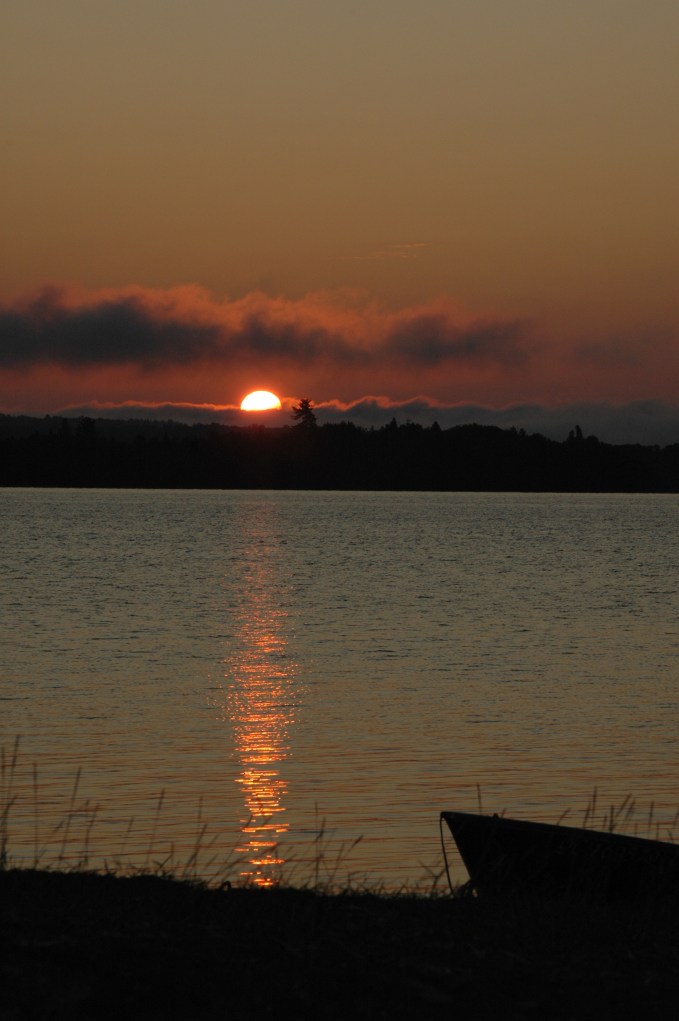
Evening boat-rides,

morning sunrise,
sandy islands,
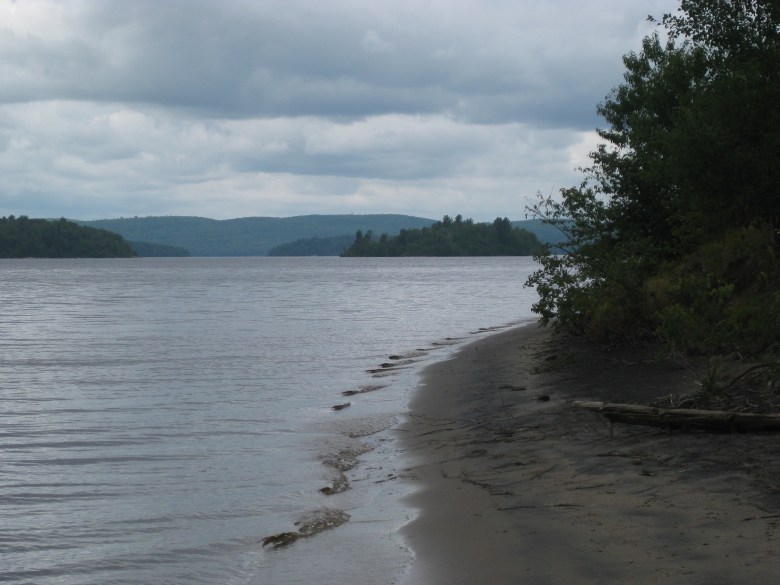
rocky islands,

active pets,

resting pets,

resting feet,

…
What can I say?
In order to truly ‘get away’ and re-charge, we were isolated from the news, the internet, and everything else that was not within a boat-ride of where we were. So, it is taking me a while to catch up on what happened…
Somehow, my brain does not want to get back into the ‘old tracks’!
In surroundings like these, it is easy to ‘get philosophical’ – and we did (as we do every year).
Last year, we got into the whole ‘if a tree falls in the forest…’ thing – and decided that the answer will vary, depending on what is meant by the words ‘hear it’ and ‘sound’. Though these are ‘simple’ English words, they can be interpreted in so many different ways that they alter the nature of the question: the very essence of what is being asked about! (As in, measurability vs. perception/relevance of reality…)
This year, we discussed much different things – no less philosophical, but certainly more ‘practical’. At the core was the concept of the diaspora (not the ‘capital ‘D’ diaspora’, which refers to the dispersion of Jews once they were exiled from Israel by the Romans, but the ‘little ‘d’ diaspora’, which refers to any group of people who immigrate not as individuals, but as a society which does not integrate, but rather enforces its own separate cultural and/or religious norms) and its effects on host societies and vice versa….and the reasons for these effects.
I’m sure I’ll be writing this all up, just as soon as I can formulate it from ‘discussions’ and ‘debates’ into a more tidied-up prose.
Still, it is difficult to discuss – and write about – the diaspora in a way that does not send people screaming and calling the thought police and shutting their minds to the very human qualities which are at the core of all the prejudice against the people who immigrate into a land and snub that land’s culture… not because of the end-concepts, but because in order to discuss this subject, one has to address many topics which are taboo to even mention, much less dissect and debate, in our politically correct society. And, one has to use language that ‘points stuff out’, instead of ‘normalizing’ things and hiding their true meaning.
Yet, I am convinced that unless we understand what is happening inside us, unless we discuss it openly and without reservations, we cannot begin to fix some of the systemic prejudices inherent in our society! And, reducing (even a tiny bit) some of these ‘barriers’ is a good thing for our society in the long term, even if right now, discussing it openly may feel like pulling a band-aid off…
After all, unless we recognize our prejudices and understand their roots, we cannot hope to overcome them! It’s just too bad that in our society today, even raising the subject is taboo… yet I intend to not just raise it, but to examine it and the very things which produce visceral reactions in us, human animals. Politely, of course…. ;0)
At the same time, there is so much which is happening now that I ‘ought to’ be writing about and screaming about…. that I feel pulled in so many directions, I keep hopping from one draft of a post to another, not finishing any!
Yet, I am making progress and I hope to be posting some thought provoking ideas soon. In the meantime, please, enjoy these pictures! And, if you’d like to see more, please let me know: I took a few thousand shots over those days, and some of them have managed to capture the ‘mood’ of the North!
I hardly ever follow ‘pop culture’: as in, what the latest celebrities are doing, and so on. Heck, I don’t even know who the latest celebrities are!
But it has been just about impossible to escape the recent ‘Michael Jackson’ media frenzy. I must say, I was rather baffled by the amount of publicity this guy’s death and funeral/memorial generated.
Even usually sane talk-shows waded into these waters.
And people were calling in!!! Ratings went up!!! Curious…
SOOOOO much was being said… And no matter where I tuned in, I could not escape some MJ coverage.
These are the things I heard people say about Michael Jacksom. I don’t know how true they are… But, they were said by many different people, and seem to be ‘accepted’ as ‘general background’, and even a simple search of the internet will get lots of hits about these claims:
Add to this:
Do you see where this is leading? Is THE QUESTION ‘jumping out’ at you? I find it unavoidable!
Did his father (the man who did not shrink from violence to force his children to perform, and who, for his whole life, has been obsessed with being ‘in the music business’) think his young son’s voice was too precious to loose to puberty?
Did Joseph Jackson arrange to have Michael ‘altered’, so his voice would never change?!?!?
Have a listen to the only known recording of a true castrato voice here. You can just about hear the same voice belting out: “Billy Jean is not my lover…”
So, what do we know about the castrati ad their lives? (Castrati are different from eunuchs, who are castrated after the onset of puberty.)
And what does science have to say about this?
“… Converging lines of evidence indicate that adolescence may be a sensitive period for [testosterone/estrogen] steroid-dependent brain organization and that variation in the timing of interactions between the hormones of puberty and the adolescent brain leads to individual differences in adult behavior and risk of sex-biased psychopathologies.” (The emphasis and [insert] were added by me.)
Peter Pan, after whom Michael Jackson named his ‘dream home’, lived in a place where young boys could not grow up – even if they wanted to. They had to leave ‘Neverland’ in order to grow up… but, perhaps, Michael Jackson did not have the choice to leave – perhaps he was stuck there, for ever.
I ask again: is it possible that Michael Jackson was a castrato?
 Xanthippa's Chamberpot